Slots, RV park avenge war, smallpox

The Pequots, once the dominant Native American tribe in eastern Connecticut, were just about exterminated by colonialists more than 350 years ago. A 1663 smallpox epidemic wiped out as much as 80% of a population estimated at 16,000. A five-year war that began the following year killed off half of the survivors, with the balance scattered so far and wide that a Pequot reservation created in 1666–the country’s first–had only 13 residents recorded in the 1910 U.S. census.

How times have changed!

Following creation of the Mashantucket Pequot Tribe in 1975 by a handful of the tribe’s descendants, the federal government in 1983 resolved a legal claim that some of the reservation land had been stolen by formally recognizing the tribe as a sovereign entity. Three years later, the Pequots–empowered by that sovereign status–opened a bingo hall, and over the next six years generated enough income to build a casino. And then they built a lot of other stuff, and still more stuff–so much, in fact, that by 2012 they were teetering on the edge of insolvency because of the $2 billion debt they had accumulated along the way.

Again: how times have changed!

This year, celebrating its 30th anniversary, Foxwoods is the largest resort casino in the Northeast, its 340,000 square feet of casino floor space more than doubling that of its largest Atlantic City rival, the Borgata Hotel Casino and Spa. Located in the sweet-spot halfway between Boston and New York City, it pulls in almost 13 million visitors a year, who come not only for the gambling but for the reservation’s 80-store Tanger Outlet Mall, three hotels, two theaters, five event spaces, a couple of spas and a golf course.

But–as they say–that’s not all! The tribe announced this week that it has sealed a deal with Chicago-based Great Wolf Lodge to build a resort, adjacent to the casino, that will include 550 hotel rooms, a 90,000-square-foot indoor water park, an outdoor pool, a family play area and an interactive adventure park. The $300 million facility is slated to open in 2024 and will “redefine what being a resort destination means,” according to Foxwoods president Jason Guyot.

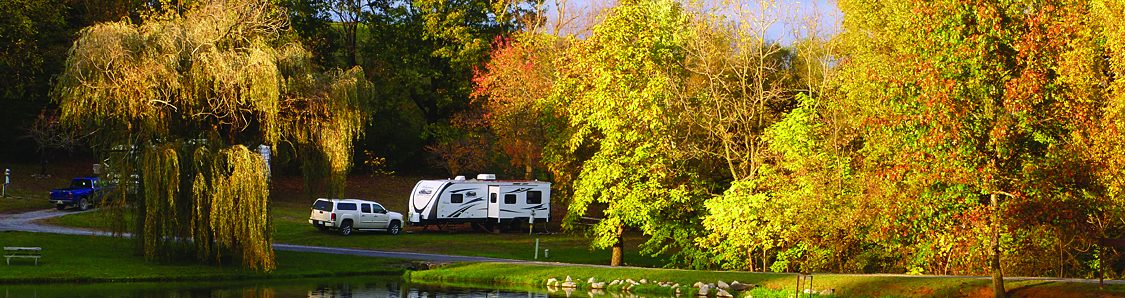
And then, of course, there’s the ongoing effort by Blue Water Development Corp. to build a $25 million RV resort on 65 acres that belong to the tribe, midway between the casino and the hamlet of Preston, population 4,788. The RV resort has met vocal opposition from local residents, partly because it abuts a pond that they contend is environmentally fragile, partly because it pushes the whole Foxwoods complex deeper into an otherwise rural community. A series of planning and zoning commission hearings and meetings, as well as parallel review by the state’s Inland Wetlands and Watercourses Commission, are ongoing and have resulted in some modifications, but this still is no minor project: 280 campsites, a welcome center, three bathhouses and a swimming pool, as well as tennis, volleyball, squash and bocce courts.

Final decisions on the RV park are expected in April, and approval seems likely. As summarized in a recent New York Post article, “Big money talks, so nature walks: along with restaurant and hotel taxes, and employment, Foxwoods added more than $4 billion in slot revenue to state coffers over three decades,” which buys an awful lot of influence.

Or payback, 450 years after the fact, using the one weapon that the white man understands best. Forget the guns and germs; it’s greenbacks that win the day.

Next post: Lost in the shuffle of recent history is the fact that the Pequots used a chunk of early gambling revenue to build a $193 million museum, near but behind the casino, dedicated to eastern North American tribes. A quarter-of-a-century later, this nod to heritage attracts fewer visitors in a year than the casino averages per day. Perhaps the Pequots could borrow a leaf from the new Hawaiian playbook, where native peoples are rethinking tourism?

Do RVers contribute to voter fraud?

Let me be clear from the outset that I do not believe voter fraud is widespread or significant but is, instead, a ginned-up bit of right-wing hysteria in the service of He Who Shall Not Be Named (HWSNBN). That said, I find it intriguing that Mark Meadows, former White House chief of staff for HWSNBN and a staunch supporter of the “big steal” mythology, is being investigated for possible voter fraud in North Carolina.

As first reported earlier this month by The New Yorker, Meadows–a former North Carolina congressman who decamped from the state in the spring of 2020 to become HWSNBN’s aide-de-camp–registered to vote ahead of the 2020 election using the address of a mobile home in Scaly Mountain, N.C. Problem is, the owner of that mobile home claims Meadows “never spent a night down there”–in apparent violation of North Carolina election law that makes it a felony to intentionally provide false information in a voter registration.

What does that matter to RVers? For the many, many full-timers who claim a South Dakota mailbox as their legal residence because of that state’s wink-wink tax benefits, potentially quite a bit. That circle was squared yesterday by Corey Allen Heidelberger, publisher of the on-line news blog Dakota Free Press, in a post headlined: “Mark Meadows Puts RV Voters on Yellow Alert: North Carolina Voter Residency Law Similar to South Dakota’s.”

As Heidelberger observed, the Meadows case “may weigh on tens of thousands of ‘South Dakotans’ who claim voting residency at a variety of South Dakota mail-forwarding storefronts while traveling the country in recreational vehicles and living on the road.” In a point-by-point comparison of the voting residence statutes of the two states, Heidelberger demonstrated that both North Carolina and South Dakota “underscore the requirement of real, permanent residency,” which in South Dakota means voters “actually live at and have no present indication of leaving the above address”–a declaration those registering to vote must make under penalty of perjury.

“As the South Dakota Supreme Court ruled in Heinemeyer v. Heartland 2008, occasionally sleeping, dining, and getting mail at a place where one pays rent–the basis of RVers’ claim that they ‘live’ in South Dakota-are not enough to establish residency,” Heidelberger observed. The Meadows investigation therefore “could cast an unwelcome light on the tens of thousands of individuals who do not actually live in South Dakota’s mailbox-rental storefronts but have been voting in South Dakota elections.”

Although Heidelberger’s otherwise heavily sourced piece does not provide a citation for his reference to “tens of thousands” of mailbox residents, much less how many of those Lilliputians have been voting in South Dakota’s elections, he raises a fair point–one that should concern many full-timers.

KOA’s lesson about eggs and baskets

Did you try to make an online reservation by logging into koa.com between Wednesday morning and earlier today? If so, this is what you saw: “Sorry we missed you. We’re busy setting up camp. Figuring out those tent poles, stocking up the Deluxe Cabin fridge, or backing up an RV takes time even for us! We apologize for interrupting your travel planning. To make a reservation, please call the campground and they’ll have you on your way to happy camping in no time!”

All of which is to say that KOA’s website was down for more than 48 hours, with no public explanation and not much guidance as to when it would be back up. Home office teams were “diligently working behind the scenes” to fix whatever the problem might be, according to Diane Eichler, KOA’s vice president of marketing. Did that mean they were holding up tent poles in various configurations in hopes of getting a better signal? No clue.

Well, stuff happens. And eventually all those diligent worker bees figured things out and apparently got the system back on line. But if there’s one take-away from all this, it’s that every KOA franchisee that already has its own independent website should make sure it hangs on to it. While that may seem like an unnecessary duplication or expense, it’s an insurance policy that pays off–not only at times like these, but against the day when a franchisee decides that maybe being a KOA is no longer in its interest.

It’s far easier to have an established website than to create one from scratch on short notice. And as KOA has demonstrated in the past, it’s not above a vindictive response to apostate franchisees that leave its system, having claimed in responses to Google searches for such campgrounds that they are “permanently closed.” For a business that doesn’t have an alternative website of its own, that can amount to a near-death experience.

Meanwhile, KOA was looking out for its ducklings by posting their phone numbers on its landing page for the benefit of would-be reservation makers. No telling how that worked out, given that many campgrounds are struggling with abbreviated office hours and insufficient numbers of desk clerks because of the overall labor crunch, which has been felt especially acutely throughout the hospitality industry. But if you’ve been trying to make a reservation at a KOA and all you’ve been getting is a busy signal or taped response, good news! You can go back online, the way God intended camping reservations be made.

Illusory freedom of the open road

To the extent that one of RV’s big attractions is the freedom to travel, when and where the heart desires, this year promises all kinds of unwelcome reckonings with reality.

First, of course, there’s the recent explosion of new RV sales that has overwhelmed many campgrounds, making it increasingly difficult to find a spot for the night without extensive advance planning. Not only does that dampen any sense of spontaneity, but all that jostling for space has put the squeeze on campground rates, transforming what was once a modestly-priced escape into an ever more expensive indulgence. It remains to be seen if that surge will continue, given recent developments, but the supply pipeline is already bursting.

And now, just as the camping season is ready to rip, RVers are having to factor in the recent surge in fuel prices. That increase was already underway before the Russian invasion of Ukraine, but has since been turbocharged. Brent crude oil prices, which were at $69 a barrel before Christmas, started climbing thereafter and hit $96.48 on Feb. 14, before dropping back just a tad. Then the tanks started rolling and oil prices took off, hitting $133.15 on March 8–a 93% increase in less than three months. They have since fallen back to the vicinity of $100 a barrel, but will remain volatile for months to come.

What this translates into at the pump is, no surprise, a stiff increase in the cost of gas and diesel. The national average price of gas was $4.32 a gallon this week, although “average” prices can mask decidedly un-average costs, typically found on the West Coast: gas in California was averaging $5.74 a gallon. Diesel, meanwhile, which powers a significant proportion of Class A coaches and trucks pulling fifth-wheels, was at $5.20 a gallon on average–up $2.11 in just the past year. Meanwhile, an AAA spokesman told Yahoo Finance that gas prices will continue to rise, even if oil prices stabilize, because the market is easing into summer blends that are more difficult to refine and more difficult to distribute.

Prices have been higher in the not-too-distant past: $4.11 for gas and $4.84 for diesel in July, 2008–but $5.24 and $6.19 in 2022 dollars, after adjusting for inflation. But that’s hardly reassuring, given that the economy was then in the midst of the Great Recession, the entire campground and RV sector sliding into a 3-5 year period of doldrums. And it’s also scant comfort when RVers, already contemplating campground costs that have shot up 50% or more in the past couple of years, are spending more than $100 each time they fill up their gas tanks.

RVIA, the RV manufacturers’ trade association, estimates that the average RVer travels 4,500 miles a year in his rig. It’s a safe bet that this number will be a lot lower in 2022, if only because RVers will be looking for destinations far closer to home. That will benefit campgrounds within 150 miles of major metropolitan areas, but those farther out are likely to do less well–to the relief of more financially resilient campers who are looking for a little elbow room. If gas prices go above $5 a gallon, on the other hand, all bets are off: the AAA reports that’s the “pain point” for 75% of all drivers, beyond which they’ll make sharp adjustments in their driving behavior.

NIMBY part 2: Maggie Valley woes

Straddling a winding North Carolina road, halfway between Asheville and the Great Smoky Mountains National Park, the town of Maggie Valley is the kind of vacation spot that appeals to people looking for hiking trails, Appalachian vistas, wildflowers and black bears. No surprise, then, that despite a relative lack of flat ground it has at least nine campgrounds and RV parks along a two-mile stretch of the main drag, which seems like a fair number for a town of only 1,700 or so–but for some, there’s never enough.

Riding the same wave of pandemic-juiced development that is afflicting other naturally beautiful areas, Maggie Valley also has been contending with the grandiose plans of a Myrtle Beach-based developer, Frankie Wood, who for the past two years has been spinning tales of how he intends to revive a now-defunct tourist attraction, Ghost Town in the Sky. Ghost Town has been sitting in mothballs since 2002, and Wood–as reported by The Mountaineer–apparently hasn’t invested a penny of his own money in the mountain-top amusement park. But he does have a “trail of bad debts and court cases over the past 30 years,” including having his own home foreclosed on in 2019.

In best “Music Man” style, however, Wood has besotted much of the Maggie Valley business establishment with his grand designs, acquiring partners for other projects he insists must precede The Big One. Chief among these is a need for more housing for all the employees he’ll eventually need, which translates into planned unit developments, trailer courts and more RV parks, which–given Maggie Valley’s vertical geography–has meant a flurry of rezoning requests to allow increased building density. And, for a while, Wood was getting all that and more, receiving dozens of land-use designations consistent with high-density development.

But while much of the business community warmed up to Wood, a clear majority of Maggie Valley residents felt otherwise. Too much was going on, and what was going on was too helter-skelter, without a clear vision of how everything would fit together or how it would reshape the town. Last fall, with two of the town’s aldermen positions up for election, two of the four candidates campaigned on a “smart growth” platform–and were overwhelmingly propelled into office by the biggest voter turnout anyone in Maggie Valley can recall. “I want to see smart growth, smart investment,” top vote-getter John Hinton summarized for the Smoky Mountain News. “Campgrounds are not smart growth. We want to see homes built. I’d love to see Ghost Town redeveloped . . . but I’ve yet to see a comprehensive plan of how that would work, a comprehensive plan that would not include a burden on the taxpayers of Maggie Valley.”

Lacking such a plan, the town is now drafting its own and expects to have it finished by July. Until then, the Maggie Valley board of aldermen hit the “pause” button, approving on a 3-2 vote a moratorium on any new developments. Sounds smart, doesn’t it? A triumph for local control over zoning and planning decisions? A recognition that there has to be a balanced approach to land use, so that someone doesn’t plop a landfill next to a hospital, or a steel mill in the middle of a housing development?

Not to North Carolina Rep. Mark Pless, who recently told a Mountaineer reporter that a six-month moratorium “sends the wrong message about Haywood County, that we are closed for business.” Dismissing the new aldermen as “wet behind the ears,” Pless–who has just finished serving the first year of his freshman term in office–said he is thinking about introducing legislation to reverse the town’s decision. Such a local override bill doesn’t require the governor’s signature in North Carolina, only needing the approval of the state’s House and Senate–and as the Mountaineer pointed out, legislators from outside the area affected by a local bill typically bow to the wishes of their colleagues.

Home rule? Only a quaint idea when there’s money to be made, even in an area as politically conservative as western North Carolina. Pretty soon the Mountaineer may have to contemplate a name change to something a little less rugged and independent. Maybe the Profiteer. Or better yet, the River City Review.

Because yep, you’ve got trouble right there in River City.

When NIMBY is a good thing

The NIMBY acronym, meaning “not in my backyard,” is a scornful term–and rightly so–usually hurled against those who oppose a development that they believe would lower their property values. Such projects typically are intended to benefit an underserved population, such as low-income housing or a half-way house, and typically are greeted with false expressions of sympathy and a dozen reasons why–although of course this is a wonderful idea–this just isn’t the right place for it. Please! Not here. Not in my backyard.

It’s therefore tempting to give in to a fleeting sense of schadenfreude when the shoe is on the other foot: when the proposed development would serve those who already have a lot, not those who have little. When a developer rolls into a quiet rural community and announces he’s going to spend a few million dollars to build a vacation playground for RVers, complete with a water park, boat docks, sports courts and game rooms, a restaurant, amphitheater, fitness and yoga center, and whatever else may strike his fancy. When the locals are forced to contemplate the prospect of hundreds of people invading their peaceful corner of the world every week, shakily driving their oversized homes-on-wheels along narrow country lanes.

But it will be good for the community, the developer will bray. Think of all the new business this will bring to the area! The new job opportunities! The boost in local tax revenues!

Somehow the math never quite works out that way, but by the time the locals figure that out it’s too late. As one resort area after another has already demonstrated, from one end of the country to the other, all that new development pushes real estate costs so high that the people filling those new but low-paying jobs can no longer afford to live in the area. The increased spending by all those new visitors is largely captured by the development itself, with only a fraction trickling into the wider community. And in most cases the tax base doesn’t grow enough to pay for the increased demand on police, fire and other services, because transients living in houses-on-wheels don’t pay nearly as much in taxes as people in sticks-and-bricks homes, even as they have almost as many needs.

But developers hoping to cash in on the pandemic-catalyzed RVing boom are looking to build new campgrounds just about everywhere–and because it makes more economic sense to build a bigger campground rather than a smaller one, those proposals tend to be big. Big enough to inject almost as many visitors into a local community as there are local residents–and those local residents, once they figure out what’s in the works, overwhelmingly don’t like it one bit. From a proposed RV park of 300+ sites at the Mashantucket-Pequot casino in Connecticut, to a similarly sized RV park proposed for Lake Anna in Virginia, to the mega-park branded as the Kentucky Bluegrass Experience Resort, grassroots opponents have convinced their local representatives to block or severely modify such unwanted intrusions into their communities.

The developers, no surprise, are fighting back on several fronts–and even are resorting to disdainful accusations of NIMBYism against their opponents. That’s flipping the term on its head, of course, which is amusing and unsustainable. Less amusing, on the other hand, is a North Carolina state politician’s promise to enact legislation that would allow the state to overrule local land-use decisions–not on behalf of low income housing or half-way houses, but to repel attempts to control the development of still more RV parks in an area that is already bursting with them.

In circumstances like these, NIMBY may be the most appropriate response.

Next post: the threat to Maggie Valley

Wealth, racial disparities widen

Camping and RVing have long been dominated by non-Hispanic whites, prompting efforts by industry leaders to identify and address barriers to entry blocking greater Black and Hispanic-American participation. (Asian-Americans have a slightly higher participation rate than whites, but a smaller piece of the demographic pie.) Symbolizing the push for greater inclusivity, KOA even featured a Black (curiously mother-less) family roasting marshmallows around a campfire on the cover of its 2021 North American Camping Report, which went on to celebrate “the changing diversity of camping.”

Yet the actual numbers within the KOA report–released late last year–present a more nuanced picture, and other studies suggest camping’s racial profile may be paling. Moreover, the wealth gap within the camping population is starting to shift, driven in part by the pandemic and partly by the higher cost of camping itself, with still unmeasured implications for the pastime’s racial makeup.

The most recent red flag in this respect is a Penn State study, published in the journal Land, which found that while almost all outdoor recreation locations saw huge increases in visitation during the pandemic, more than 13% of Americans stopped participating in outdoor recreation during the same time. And while as many as 20% of those getting outdoors were doing so for the first time, their numbers were predominantly white and upper income, even as those who quit were more likely to be non-white and from lower income brackets.

Comparing the ethnicity of those who had dropped out of outdoor activities during the pandemic with those who regularly took to the outdoors for the first time, the study found that the drop-outs were 61.8% white, 11.9% Latino and 14.7% Black; the newbies, meanwhile, were 76.6% white, 7.5% Latino and 8% Black. When compared by income, 47.2% of the drop-outs had annual household income under $40,000, while 19.5% had household incomes of more than $80,000. Of the newcomers, 39.3% were on the low end of that range, while 25.1% were on the upper end.

The Penn State study threw a wide net, looking at outdoor recreation broadly and not just camping, which may explain why some of its ethnic findings differ from KOA’s. The latter, for example, claimed that 24% of first-time campers in 2020 were Black and 15% Latino, or more than double the rates in the Penn State study. But while KOA’s statistics for Black first-timers have seen a steady rise since 2016, its own numbers for Latino first-timers have been on an overall decline since 2017.

To further muddy the waters, the 2021 Outdoor Participation Trends Report, released by the Outdoor Foundation, concluded that Black and Hispanic Americans “remained significantly underrepresented outside.” Indeed, Black participation in outdoor activities has actually decreased since 2007, despite occasional fluctuations–or as the foundation summarized, has remained “stubbornly low compared to other groups.”

Mixed though the ethnic picture may be, however, there’s little question that the people getting to play outdoors are ever wealthier. When it comes to wealth disparities among first-time campers in 2020, KOA’s findings were even more stark than Penn State’s: 41% had household incomes of more than $100,000, with an additional 17% in the $75,000-$99,999 range. The implications of that income surge on camping’s ethnic profile? The average household income in 2020 for Hispanics was $55,321; for Blacks, it was $45,870.

You can do the math.

Ice-fishing tents for the homeless

Sometimes it’s hard to decide whether, as a society, we’ve just taken one step forward or one step back. Case in point: Denver has created what amounts to a campground of ice-fishing tents to house the homeless. It beats sleeping outside–Colorado has been in a deep freeze the past week or so–and for many occupants it beats sleeping in public shelters, which are overcrowded and often perceived as unsafe. But as observed by Nan Roman, president of the National Alliance to End Homelessness, the approach signals that “we’re institutionalizing that it’s OK for people to live outside.”

As reported yesterday by the Associated Press, the insulated tents come with electrical outlets, a cot and a zero-degree rated sleeping bag–but apparently no heat source. While cities like Seattle and Portland, Oregon, have experimented with building tiny homes for the homeless, even the most modest designs can cost nearly $25,000 apiece, compared with the $400 cost of an ice-fishing tent. And given the situation in Colorado, where record-high home prices have been exacerbated by the loss of hundreds of homes to a December prairie-grass fire, such a low-cost approach can serve the greatest number for the least expense.

But as Roman intimates, such stop-gap measures run the risk of becoming normalized. The country’s housing crisis is growing more urgent with each passing month, and without a vigorous overhaul of urban housing policies, the lack of affordable housing will only grow more extreme. “It’s just hard to see us say as a nation, ‘Well, it’s okay to see people stay outside as long as they have a tent,’ ” Roman told the AP reporter. “It’s hard to feel that’s progress.”

Last night’s temperature in Denver dropped to 5 degrees Fahrenheit. It was -6 on Wednesday, and hasn’t risen above freezing since Monday. Need more be said?

RV parks squeezed by housing costs

It may not be immediately obvious that an explosion in home prices will increase campground costs, but that’s because our understanding of this niche real estate market gets channeled by that “camp” prefix. “Camping” means recreating which means getting away from it all, leaving little mental room for other considerations. Yet campgrounds increasingly are a key residential resource, offering affordable housing options to itinerant workers as well as those priced out of more conventional housing. And as the cost of that housing goes up, so does demand for RV sites.

That’s why this week’s release of the latest Case-Shiller index should interest, and concern, anyone who owns or is thinking about buying an RV. The index, widely watched by investors, measures average home prices in major metro areas across the country–and it rose 18.8% over the 12 months ending in December. That’s the highest calendar-year increase ever recorded over the index’s 35-year history. Meanwhile, a separate measure compiled by the Federal Housing Finance Agency, also released this week, found a 17.6% increase in home prices over the same stretch.

As housing prices soar–the median cost of an existing single-family home was $361,700 last quarter–home sales begin to decline and the whole market starts locking up. People unable to buy a home will turn to rental housing, which puts upward pressure on rents but also attracts the attention of commercial real estate investors. Indeed, as reported Jan. 25 by the Wall Street Journal, the most popular commercial property among investors last year was apartment houses because of their perceived ability to keep raising rents. Of course, higher rents keep squeezing out people with low to modest incomes, who then turn to . . . yup, house trailers (a/k/a “manufactured housing”) and RVs, as housing of last resort.

Some of those RVs increasingly are turning up on city streets because their owners can’t afford even the comparatively low rates charged by RV campgrounds–and some wouldn’t be permitted in most RV parks, anyway, because they’re too old and dilapidated. But those who can afford $500 or $600 a month for a long-term site are jostling with more conventional RVers for a spot, and even overnight sites are in greater demand because of this additional influx of “campers.” Campground owners faced with this increased demand, meanwhile, will increase their rates accordingly–sometimes not even deliberately so, thanks to the growing adoption of algorithm-driven “demand pricing.”

In a wider context, therefore, campgrounds are properly seen as just one component of a housing ecosystem; changes in one area can ripple throughout the entire system. That may not have much to do with campgrounds as recreational outlets, but it most definitely will affect their affordability and overall character.

Tax dollars and RVing, part 2

In my last post, I questioned a New York state decision to award a $200,000 development grant to a privately-owned RV campground. The 300-site proposal has yet to complete public hearings, has not had an environmental impact study and has generated a considerable amount of local opposition–so why has the state already decided to support a commercial, presumably profit-making enterprise with its residents’ tax dollars?

But this is hardly the most egregious example of government meddling in the free market. Far more common than such favoring of a particular private enterprise, and ultimately more damaging on several fronts, is government use of tax dollars in direct competition with the private sector. Such spending is contrary to free market principles, diverts tax money from more critical–and usually underfunded–government programs, and typically is wasteful to boot.

Take, for example, the recent efforts by allegedly conservative South Dakota Governor Kristi Noem to build a 176-site campground in Custer State Park, for a whopping $9.8 million. That per-site cost projection of $55,000 is roughly twice the going rate of new park construction in the commercial sector, and private campgrounds typically include more amenities in their construction budgets than do their public counterparts, further increasing the disparity. On the other hand, Noem’s inflated price tag is right in line with the projections I used to see when reviewing Virginia State Parks budgets for campground construction, so bloated government spending on such projects seems par for the course across the country.

Once built, such government-underwritten campgrounds typically offer lower rates to RV owners than their privately-owned competitors, who have to charge enough to pay off their unsubsidized (except in New York) construction loans and mortgages. At the same time, the inadequate revenue such public facilities generate historically have failed to cover ongoing maintenance and repairs, resulting in the current nationwide backlog of deferred maintenance that runs into the billions of dollars. While user fees should not be expected to cover the costs of public facilities open to all–that’s what taxes are for–it’s not asking too much to have RV owners pay the market rate for their more privileged recreational choices.

There is a place for government spending on outdoor recreation–for activities or resources that the private sector can’t provide. Hiking and dirt-biking trails, back-country shelters, reforestation and erosion control projects, scenic drives and large man-made lakes for boating–all come to mind as appropriate uses of tax dollars, because if the state or federal government doesn’t do them, no one will. But campgrounds? The number of deep-pocketed investors falling all over themselves to get into the business should send a clear signal to the Kristi Noems of the world to keep their government mitts to themselves.