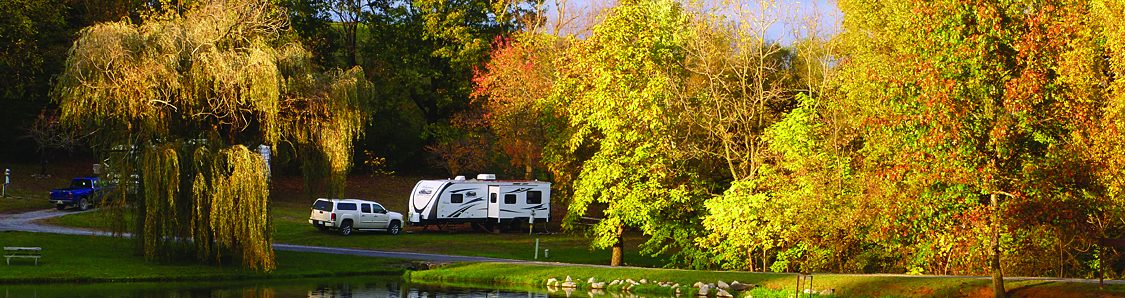
Forbes mangles the RV park story

There was a time when, for all its excesses-and there were many!–Forbes magazine at least could be counted on for insightful reportage on American capitalism. Such coverage, to be sure, was steeped in unabashed boosterism, but it also looked beyond surface appearances and poked at deeper trends and developments. It was smart and literate, and it took its numbers seriously. Alas, no more.

Last week, Forbes ran a piece headlined, “Growing Demand Fuels Rising Tide of New, Expanded RV Parks,” which sounded promising only as far as the first sentence. There, the reader was informed that “this past winter saw construction of more than 50 new campgrounds and RV parks, offering more than 15,000 new RV sites”–a statement which on its face is absurd and should have been red-penciled by any copy editor with an ounce of mathematical smarts.

Although Forbes would have us believe that 300-site RV parks were being thrown up in a matter of months all across the U.S., none of the three examples it highlighted to give readers “a sense of the wholesale explosion of the RV park phenomenon” comes close to meeting that hyperbolic description. The largest, Gulf Shores RV Resort, will have an “anticipated” 175 sites this summer; the “brand-new” Red Coach Resort hasn’t started advertising its 47 sites, only 17 of which have hook-ups; and River Ridge Retreat, which opened last fall with 23 sites, added 31 more in March.

In other words, the “wholesale explosion of the RV park phenomenon” is more of a whimper than a bang, at least within the pages of Forbes magazine.

The story missed by “The Capitalist Tool,” as Forbes used to brand itself, is the extent to which capitalism run rampant is rapidly destroying the campground industry as we’ve known it. The same widening of the wealth gap that has splintered American society overall is seeping into the way we camp and use the outdoors, transforming a formerly egalitarian form of recreation into an economically stratified one anchored at its low end by people desperate for shelter. The RV park phenomenon is no longer just about “camping,” but about housing of last resort.

A decade ago, Forbes changed its tagline to “Change the World,” a limp retreat from the jaunty in-your-face insouciance of “The Capitalist Tool,” so maybe it’s not surprising that its coverage of RVing is equally mealy-mouthed and shallow. Were it otherwise, perhaps it might follow up on stories like that of Garlic Farm RV Park in California, midway through a three-year conversion of all 160 of its RV sites into a subdivision of 400-square-foot “tiny homes.” Or perhaps it could look at Payson, Arizona, where the mayor is urging changes in the city code to allow people to live in their RVs permanently because the school district is losing teachers who can’t find a place to rent or buy. Or it could report on the Flathead River in Kalispell, Montana, where complaints of RV sewage and portable potties being emptied into one the country’s most iconic waterways are pressuring the U.S. Forest Service to severely limit public access, if not shut it down altogether.

To the extent that the “RV park phenomenon” is an outgrowth of the explosion in RVing and camping, the story is far more nuanced and ultimately tragic than Forbes has recognized. Then again, Forbes is hardly unique. The industry overall has been so enthralled with itself that it rarely casts a critical eye on its own excesses, and at the extent to which it is contributing to the degradation of the natural environment it purportedly celebrates. “Change the world,” indeed.

Most recent posts

We’re all fiddling while Rome burns

Here it is, another three weeks before we get to Memorial Day, and already fire sirens are wailing all across the west. Blazes in Arizona and New Mexico have started pushing smoke into Colorado and Utah, reminiscent of last year’s West Coast fires that cast a pall over the eastern seaboard. Fire restrictions and bans are being ramped up throughout the Mountain West, affecting not only campfires but cigarette smoking and the discharging of firearms. The country’s largest reservoirs have been drawn down so far that decades-old corpses are emerging from the depths.

The causes of all this are well known. In the Sierra Nevada, the first three months of this year have been the driest in California’s recorded history, resulting in a snowpack that currently stands at only 35% of the average. One consequence: the state’s wildfires this year to date already have burned 35% more acreage than they did last year. In Colorado, meanwhile, the below-average snowfall of this past winter is raising fears among state officials that they’re heading into the worst wildfire year in state history. As reported by the Denver Post, for example, the snowpack in the San Juan Mountains is less than 25% of what it should be and is melting at a “ridiculous” rate.

The “facts” are unmistakable, but as the Covid pandemic demonstrated (and unfortunately continues to underscore), there are people for whom facts can be terribly inconvenient. Calls to change behavior for the greater good–to do something that will protect the lives and well-being of others, such as wearing a face mask or refraining from watering a lawn–are resisted at best, attacked as government oppression at worst. All sorts of spurious arguments and fantastical rationalizations get spun out, but rarely is there any acknowledgment that something must be done, much less what that something might be.

What brings this to mind most vividly is yesterday’s decision by Colorado’s Democratic legislators to abandon their attempt to address the vulnerability of homes built in wildfire-prone areas, such as the thousand homes in Boulder County that were torched last December. The forsaken proposal would have created a 17-member state board charged with adopting strict statewide building standards for the wildlife-urban interface by 2024, but was immediately attacked for its top-down approach. With more than 200 other bills pending and the legislative session supposedly ending today, Senate Republicans threatened to stall the entire process if the bill didn’t get yanked, forcing the Democrats to capitulate.

The Republicans, it should be mentioned, did not have a substitute proposal. That would have required acknowledging that a problem exists, and that the role of government is to deal with problems that threaten public welfare.

Colorado thus remains one of only eight states in the country without a minimum wildfire mitigation building code, even though its four largest and most destructive fires all occurred within the past two years. Moreover, the state’s lack of such a building code costs it big points when bidding for FEMA grant money, which flows more readily to states with a more pro-active approach to fire prevention. But, hey, how you can put a price tag on independence from the yoke of big government?

In southern California, meanwhile, an estimated 70% to 80% of urban water use is devoted to landscaping–in a state where agricultural fields are being left fallow because there isn’t enough water. But when water district officials impose restrictions, such as a demand that water use be reduced to 80 gallons per day per capita, public pushback has been immediate and vehement. Despite water bills of more than a thousand dollars a month, affluent homeowners who have spent as much as half-a-million dollars on landscaping are defying both regulatory pressures and common sense.

“A lot of people out here, they just feel kind of entitled,” Thomas Anderson, a security guard for entertainers, told The Washington Post earlier this week. “So they be like, ‘We got the money we’ll just pay whatever it is. Whatever the penalties is, so what? We’ll just write it off.’ They’re just going to suck up all the water anyway.”

Maybe all the numbers and statistics are too abstract for some people to absorb, so here’s one final sobering fact to drive reality home: as the fires in northern New Mexico continue to rage, various news sources are reporting that the moisture content of some of the timber they’re consuming is less than is found in kiln-dried lumber.

And yes, these are all things to think about if you’re camping, and especially if you’re boondocking.

Most recent posts

How do tiny homes make any sense?

Let me state at the outset that I love the idea of tiny homes. In a society still besotted with outsized everything, there is something satisfyingly modest and efficient about these little houses on wheels. They’re cute. They’re snuggly. The pictures of new ones marketed by the Tumbleweed Tiny House Co. look remarkably well finished and appointed, with clean lines and good lighting. They’re adorable–and way too expensive and in oh-so-many ways completely impractical.

What got me going on this line of thought was the email I received a couple of days ago from Tumbleweed, promoting its sale of a 2020 Elm model that apparently (“bank-owned,” the pitch asserts) was repossessed, which is never a good sign. This 26-foot version can be had for $15,000 off its list price, which translates to $770 a month after an $11,000 down-payment–or $983 a month if you can’t come up with a down-payment of more than $1,000. This latter option, it should be pointed out, may be why this particular little house is back on the market.

Before you start day-dreaming about having your every own home for as little as $770 a month, consider some other numbers. The first is that the loan you’d be buying is for 25 years at 7.75% interest. That interest rate is at least 250 basis points higher than a regular mortgage because tiny homes have questionable appreciation value: they’re more like cars, in that respect, than actual real estate. Moreover, it’s questionable whether a tiny home will even last 25 years, which means that when the loan is all paid off you may be left with nothing more than an immoveable shack.

Here are some more numbers: the 26-foot Elm has 204 square feet on the main level, plus an additional 73 square feet in the sleeping loft–which, as the name denotes, is not tall enough for a short person to stand upright. With an after-discount price tag of $99,879, that works out to $489.60 per square foot if you disregard the loft, $360.57 per square foot if you throw in the munchkin footage. Either way, that’s easily twice the cost of building a, you know, real house.

But, you may reply, a tiny home is so much more than a house–it’s portable, a modern version of a nomad’s tent or a gypsy (sorry, Roma) caravan. Which is true enough, provided that you also have a 1-ton truck to pull the thing, since it weighs 12,200 pounds. Add the cost of such a tow vehicle and now you’re looking at a total price tag that would cover virtually any Class C on the market and quite a few Class As–and those come with holding tanks, which tiny homes don’t have, further limiting their functional portability.

The other thing that most Class As and Class Cs have that you won’t find in tiny homes is slideouts, not to mention a helluva lot more storage space. In fact, for all their good looks and typically fawning press, tiny homes are, well, tiny. At eight feet from port to starboard they’re only two feet wider than a standard prison cell, and without the ability to push those walls out you may feel just as confined. Do a virtual tour of one of these units and think about where you could put tools, books, sports equipment or crafts supplies, and you’ll quickly realize that anything that can’t be digitized wouldn’t remain a significant part of your life.

For all that, look for more of these Lilliputian dwellings to pop up at more and more RV parks and trailer courts. Tumbleweed, for one, is also promoting “tiny house hotels” to campground owners, offering bulk discounts of up to $6,000 per unit when ordering five or more. Could be fun to visit, if not so much to live in long-term.

Most recent posts

Sell, sell, sell and cut, cut, cut

Frank Rolfe, already well-known for his predatory approach to mobile home park investing, has been preaching the same gospel to RV park investors in his RV Park “University” offerings and in regular podcasts and email broadsides. I’ve written about him before, mostly as a warning to others, but lately he’s upped his game to such an objectionable level that he’s worth a return mention.

His most recent screed is titled “The three best methods to improve RV park net income,” and it kicks off by turning to “Chainsaw” Al Dunlap for inspiration. Dunlap was “a well-known corporate raider and business efficiency stalwart,” Rolfe would have you believe, and Dunlap’s guiding motto of “sell, sell, sell and cut, cut, cut” is “not a bad mantra for RV park owners, as well.”

Rolfe goes on to write that there are three “key areas” that have maximum impact on the bottom line, the first being an unremarkable emphasis on improved marketing. It’s in the second and third key areas–“increase rents and occupancy” and “cut operating costs”–where Rolfe shows his true colors, and RVers should not be surprised to learn that in this zero-sum game, whatever benefits Rolfe and his acolytes will not benefit them at all.

Step one, “increase rents. Yes, it’s that simple.” Step two, “bring in extended stay customers,” taking advantage of “a large and growing category of customers who want to live in their RVs full time.” Moreover, Rolfe adds, there is a growing fleet of tiny homes “that can only be placed in an RV park by law,” providing campground owners “an extremely dependable (read: captive) source of income.” Step three, put more emphasis on park models and glamping, creating “more of a ‘hotel’ format, where the customer brings no RV of their own.”

Having thus jacked up rates while decreasing the number of transient RVing sites, Rolfe moves on to the expense side of the ledger, starting with “horribly bloated and completely unproductive” payrolls that must be slashed. That non-specific analysis is followed by the equally vague observation that a “simple line-by-line review of each cost item may yield huge dividends,” especially if approached with an “analytical and creative” mindset.

And there you have it: sell, sell, sell and cut, cut, cut.

Oh–but one more thing. Al Dunlap, who earned his “Chainsaw” moniker after cavalierly firing 11,000 employees at Scott Paper, for which he received $100 million in compensation, went on to try the same “analytical and creative” tactics at Sunbeam. He eventually got fired by Sunbeam’s board of directors– creating the memorable headline, “Board Cuts Chainsaw”–and subsequently settled a civil suit, filed by the Securities and Exchange Commission, accusing him of several counts of accounting fraud that misrepresented Sunbeam’s financial results. He paid a $500,000 fine and agreed to be barred from ever again serving as an officer or director of a company.

Three years after it fired Dunlap, Sunbeam filed for bankruptcy. Two decades after that, Frank Rolfe has found his mentor.

Most recent posts

‘A luxurious state of privation’

Just in time for the release of KOA’s eighth annual report about the state of camping in North America, historian Phoebe S.K. Young has published a book that gets at the deeper complexity of this fundamentally American pastime and of our love-hate relationship with this wacky idea of sleeping outdoors.

As reviewed by Dan Piepenbring in the current issue of The New Yorker, Young’s book, “Camping Grounds: Public Nature in American Life from the Civil War to the Occupy Movement,” explores Americans’ confusion about what constitutes legitimate camping and how it’s different from simple vagrancy or homelessness. As Piepenbring notes, as far back as the 1870s, campers “didn’t want to be mistaken for actual vagabonds, and the line between the two was easily smudged.” An early camping enthusiast described it as “a luxurious state of privation,” to which Piepenbring adds, “One of its luxuries was that it was temporary.” Indeed, the travel industry of that time began to promote tramping as an aesthetic, “something that campers could slip into and shuck off as they pleased.”

Came the Great Depression, however, and the shucking-off was not as easily accomplished–as is becoming increasingly true today. With an estimated 1.5 million Americans sleeping outside or in shelters, “budget-minded vacationers were sometimes cheek by jowl with the down-and-out. Who could say which was which?” In a further echo of today’s spurious industry representations, “manufacturers of camping trailers went out of their way to disclaim the use of their products as a ‘permanent address,'” in an apparent attempt to further the conceit that this was just a temporary affectation.

But as more than 3 million visitors overran national parks and monuments–at that time considerably less developed than they are today–their undisciplined impact on the environment was unsustainable. “The deluge was unmanageable,” Piepenbring wrote, in a passage that is equally descriptive of today’s circumstances. “In addition to arresting vistas and pristine forests, campers expected generous amenities–firewood, electric lights, running water, garbage collection–and they were not in the habit of leaving nature as they found it.”

Struggling to strike a balance between leisure and nature, in support of a belief that doing so was “a potent way for citizens to demonstrate national belonging,” U.S. Forest Service employee Emilio Meinecke came up with a campground design to minimize campers’ impacts on plant life that is still used today. Yet even as almost 90,000 acres of federal campgrounds were reworked according to his template, Meinecke was fretting that campers were overstaying their welcome. Some visitors, he complained, “evidently camped for a long time,” giving his sites a “‘used,’ second-hand look” that spoiled it for “decent people who are not slum-minded.”

Nearly a century later, history is repeating itself. While Young’s more contemporary focus in the second half of her book is on camping as a tool of social protest, including tent cities raised by the Bonus Army in 1932, Resurrection City in 1968 and Occupy Wall Street more recently, it could as readily have noted that uncounted millions are again “easily smudging” the distinction between campers and “actual vagabonds.” At least a million RVers are full-timing, often on public lands, often for the extended periods that gave Meinecke fits about creating a “‘used,’ second-hand look.” Another 600,000 or so Americans are living on city streets and in shelters, and untold tens of thousands more are sheltering in national forests and on Bureau of Land Management acreage. Many are in tents, but many also are in battered old RVs, adapted vans and school bus conversions.

The worsening housing crisis will only increase these numbers (all of which are conservative estimates), adding to a “camping” population that is not accepted as such–if it’s even recognized–by the various industry-driven studies of the subject. When one of the key findings in KOA’s annual survey is that nearly 40% of campers report a household income of more than $100,000, for example, you can be pretty certain its research did not extend to those for whom the outdoor “lifestyle” is not something they can just “shuck off.”

Most recent posts

Should park managers be certified?

The blurred distinction between mobile home parks and RV parks is growing even more fuzzy in California, where a Senate bill that would require managers of trailer courts to get annual training and certification is in the legislative hopper. Trailer courts–and, almost incidentally, RV parks as well.

SB 869, introduced in January by Senator Connie Leyva, would require “each person employed or acting in an onsite or offsite managerial capacity or role, on behalf of a mobilehome park or recreational vehicle park to receive appropriate training of at least 18 hours” by May, 2024, and additional training each year thereafter. Trained park managers would receive a certificate of completion, to be posted “in a conspicuous location onsite.” Failure to get the training or to post the certificate could result in civil penalties and a suspension of a facility’s operating permit.

The bill is vague on the training specifics, leaving it up to the state’s Dept. of Housing and Community Development to fill in the blanks. But it does specify that the department “shall review the complaints it has received” from park residents when designing the curriculum, paying particular attention to complaints about evictions, fees, management of utilities, homeowner communications and how sales of a campground are handled. The training is also to include parks’ contingency planning and how they will respond to medical and other emergencies.

There is more, but it may all be moot, as the bill has been assigned to the Senate Appropriations Committee Suspense File. A potential graveyard for all legislation with an annual price tag of $150,000 or more, the Suspense File’s hundreds of bills will be reviewed by the committee May 18 and either approved for floor vote or quietly allowed to expire. Which way SB869 will be decided is uncertain, but clearly CampCalNOW, the state’s trade association for RV parks and campgrounds, believes it’s a done deal, emailing its members with the assurance that the bill has been “shelved.”

Perhaps. On the other hand, Eric Guerra, a consultant for the Senate Select Committee on Manufactured Home Communities, believes that “things are still open.” The bill “is a pretty high priority” for Senator Leyva, who chairs the committee, following a rising chorus of complaints from park dwellers about predatory practices by park managers. Unlike neighboring Oregon and Nevada, both of which mandate training and licensing for park managers, California has no standards for such employees, even though the managers may be responsible for the safety of more than 200 residents, sometimes in remote areas.

Although most complaints that triggered the proposal have come from trailer parks, RV parks got swept into it because in many cases “they have become de facto mobile home parks,” Guerra explained. And while CampCalNOW argued that most RV parks in the state don’t have the kind of long-term residents that the bill is seeking to protect, the exceptions have been disturbingly stark. Most notably, the Fairplex RV Park in Pomona, a former KOA, was the subject of a blistering 2016 L.A. Times investigation that resulted in a state audit issuing several safety violations, including for frayed overhead electrical wires and bathrooms in disrepair. That memory lingers, Guerra said, and the Fairplex park was not unique.

It’s entirely possible, if Senator Leyva gets a sense that the political winds are unfavorable, that SB869 will yet be amended to modify its RV park aspects, while leaving stronger measures in place for mobile home parks. But whose interests would be served by a more narrowly tailored bill? A training requirement of 18 hours–which the bill expressly allows to be done online, in as many installments each year as desired–is at most a nominal obligation. RV parks, like trailer courts, increasingly are home to economically and physically vulnerable populations, in a state that is at growing risk of wildfires and mudslides. Ensuring that the people most directly responsible for maintaining a safe environment have just a teeny bit of instruction about their duties would seem a no-brainer.

The wonder is not that RV parks might be opposed to legislation that would set some minimum operational standards, but that more campground owners are not proactively implementing policies and practices that would safeguard their customers. Consider this, for example: when’s the last time you stayed at an RV park that had an automatic external defibrillator that you could readily access, in case your traveling companion had a heart attack? As with so many other common sense precautions, most RV park owners simply hope for the best and reflexively push back against anything that smacks of government regulation.

Leyva’s bill does not mandate AEDs, but by raising the subject of how campgrounds respond to emergencies, certainly opens the door for discussing this and other measures. RVers in California should be thankful for that, even if campground owners are less enthused.

Most recent posts

First they came for the homeless . . .

No matter what metrics you examine, the national housing crisis gets only more dire with each passing month–yet the prevailing social response has been to make it ever harder for people to find a place they can call home. The predictable result: more people living on the streets, more rattletrap RVs heading for public lands and growing tension between those who own a home (or can afford rent) and those who don’t.

On the supply side, the latest news is that the average home price in the U.S. popped above $375,000 in March, a 15% increase over the past 12 months. This development came against a backdrop of mortgage rates nearly doubling in the same period, prompting headline writers to coo that an overwrought real estate market might finally be poised to cool down, as if that’s somehow meaningful. But unless they’re predicting an actual real estate downturn (they’re not), what the headline writers are saying is that housing prices will remain lodged at levels far higher than most working people can afford.

On the demand side, there simply isn’t enough affordable housing to go around, and the consequences are truly inhumane. Thomas Fuller, writing last week for the New York Times out of its San Francisco bureau, reported that Los Angeles last year averaged five homeless deaths a day, including 287 who “took their last breath on the sidewalk.” Overall, he added, “the epidemic of deaths on the streets of American cities has accelerated, as the homeless population has aged and the cumulative toll of living and sleeping outdoors has shortened lives.”

Austin, Denver, Indianapolis, Nashville and Salt Lake City are among the cities Fuller cited where officials and homeless advocates have been alarmed by the rising number of deaths–yet the public response to homelessness in these and other cities has been increasingly punitive. The Los Angeles City Council, for example, recently decided that starting May 15 it will again enforce parking restrictions for “vehicle dwellings,” which essentially means that derelict RVs will get towed away. There undoubtedly are numerous legitimate reasons for doing this–not least among them a marked upswing in RVs going up in flames on city streets–but without an offsetting effort to provide low-cost housing, this simply means the city will be pushing homeless people back onto the sidewalk.

Sidewalk living, however, is increasingly criminalized. Austin, once an affordable city, has become the national leader in rising housing costs, with rents soaring 40% over the twelve months through February. Its residents nonetheless voted last year to reinstate criminal penalties against public camping, and the Texas legislature piled on a few weeks later by banning homeless encampments statewide and fining offenders $500. That’s called “squeezing blood from a stone,” but other states–including Florida and New Hampshire–have followed suit with similarly draconian bans.

Remarkably enough, some few landowners have tried to do what their public representatives apparently can’t, opening their private property to homeless campers. Unremarkably, mostly what they get is community pushback and official slap-downs. When one such private project, Camp Haven Sanctuary, became home to 19 otherwise homeless people outside Austin, local neighbors blasted the effort in online posts that were so vitriolic they had to be taken down. A similar encampment on private land in Akron, Ohio, was shut down by city officials who said it violated zoning restrictions–as were encampments in Salt Lake City, Morganton, WV, and elsewhere.

The housing squeeze is getting worse in other ways as well. Mobile home parks, frequently cited as America’s cheapest non-subsidized housing, increasingly are being sold either to developers who want the land for other uses, or to speculators intent on raising the rents. On those rare occasions when state legislators try to enact some kind of relief–as is happening currently in Colorado, where a House bill would cap annual rent increases–the real estate industry responds with cries about “rent control” and accusations of government overreach. Those may or may not be valid points, but they’re never followed by alternative approaches for dealing with a growing human tragedy.

Elsewhere, Tennessee earlier this month enacted a law straight out of a Dickens novel, requiring renters who want to appeal an eviction to first produce a year’s worth of rent. To break that down: if you’re a renter in Tennessee and can’t afford a rent hike, your landlord can evict you–and you’ll need to show a judge $15,000 or so before you can even file an appeal. Since for many people that’s even less likely than homeless people having $500 to pay a fine in Texas, the inevitable result will be even more people on the street.

Tennessee, to be sure, may be on the kook fringe. This is the state, after all, that made national headlines this past week when it also hopped onto the criminalization bandwagon, passing legislation that makes it a felony to camp or sleep in parks or other public property. Sen. Frank Niceley (see? another Dickensian touch, if rather sardonically so) backed the bill by telling his colleagues that in 1910 Adolf Hitler “decided” to be homeless. “So for two years, Hitler lived on the streets and practiced his oratory and his body language and how to connect with the masses and then went on to lead a life that got him in the history books,” Niceley recounted.

“So a lot of these people, it’s not a dead-end,” Niceley concluded, in the ultimate perversion of a let’s-make-lemonade-out-of-lemons sermon. “They can come out of this, these homeless camps and have a productive life — or in Hitler’s case a very unproductive life.”

Hard to know just what Niceley intended with that unfortunate digression, but one reasonable interpretation is that our treatment of the homeless is breeding thousands of potential Adolf Hitlers. Maybe that suggests we should get serious about finding alternative responses. Until that happens, however, we can expect more homeless people occupying state and federal land, and more of a jaundiced attitude toward RVers and campers in general.

Most recent posts

Dyrt-y facts about camping in 2022

The Dyrt, a rapidly growing web site and mobile app, is possibly the country’s most comprehensive platform for the camping public–which means, in turn, that The Dyrt’s users may comprise the country’s broadest demographic profile of the camping public. So when The Dyrt’s users have their temperature taken, it pays for other industry participants to take notice.

But first, some context. The Dyrt has listings of 44,000 public and private campgrounds and “other properties” that accept RVers and tenters. Last year the site pulled in more than 27 million visitors, more than doubling its 11.8 million visitors in 2020. More than a million of those visitors have been sharing tips and reviews on the site, and this past December, 3,000 of them–selected at random–responded to a far-ranging questionnaire about themselves and their experiences. An additional 2,000 respondents, chosen to be census-representative by age, race, gender and region, also were questioned, by two third-party organizations.

The result, released earlier this month, is the statistically most meaningful picture of what it’s like to go camping in America that the industry has produced to date. Some of its findings are by nature unsurprising–it’s their size or extent that may catch your breath. Other conclusions are disconcerting, to say the least. Among the highlights:

The camping “season” isn’t–camping is on the rise every month of the year, but no more so than in winter, up 40.7% since 2019. Camping is also less and less of just a weekend event, with 70% of campers now taking trips that include weekdays. Some of that growth is fueled by the rise in remote working, with the number of campers toting their laptops with them nearly tripling since 2018–in fact, The Dyrt notes, 23.8% of campers worked from a campsite last year.

The inevitable result, as most campers already know: it really has become a lot harder to book a campground. Nearly half of all campers reported difficulty finding available campsites in 2021, including 47% on the West Coast and 48% in the Mountain West and southwest; at the opposite end of the spectrum, of those trying to book a New England campground, only 37% reported difficulty. Overall, three times as many campers said they had trouble booking a site in 2021 as in 2019.

What or how you camp had a lot to do with how much trouble you had. Tenters had only twice as much difficulty in 2021, at 37%, compared with 18% in 2019. Motorhome and Class C campers, meanwhile, saw their comparable numbers soar to 51% from 14%, while those towing trailers weighed in at 55% and 16%, respectively.

Here’s the disconcerting part: frustrated by the overcrowding at conventional campgrounds, that unprecedented flood of campers is now washing over the backcountry. The number of boondockers looking for “dispersed camping” doubled in just one year, The Dyrt reported, adding that the four most-saved “campgrounds” on its app in 2021 were all dispersed-camping areas: Blue Lakes in Colorado, Edge of the World in Arizona, Shadow Mountain in Wyoming and Alabama Hills, California.

All four, it needs to be noted, have become severely degraded. Alabama Hills, on the eastern slope of the High Sierra and a much sought-after Hollywood shooting location, had to be closed down late last year because it was trashed so badly. The damage came despite an “Eastern Sierra Dispersed Camping Summit” held the previous February, in which half-a-dozen local groups managing public land in the area brainstormed strategies to prevent a repeat of the “carnage” from 2020, to little avail.

At Shadow Mountain, as another example, as many as 400 people can be camped in an area that has only one bathroom–back at the road entrance. Forest managers say the area’s occupancy has tripled in four years, from about 30% in 2016 to 91% last year. Human waste is the most obvious resulting problem, but officials also worry about poor food storage habits leading to increased wildlife-human conflicts.

That’s not the kind of information that will turn up in a search of The Dyrt. Nor will The Dyrt’s data base account for the growing number of “non-recreational campers,” which is land manager-speak for transient retirees, displaced families and homeless individuals. The western states with the most available land for boondocking also have some of the country’s highest housing costs–and among the highest rates of homelessness. People have to live somewhere. . . .

There’s no reason, alas, to think that any of these trends will soften in 2022.

Most recent posts

Ever been to a BYOV event? It’s on!

My last post led off with a reference to T.S. Eliot’s poem, The Waste Land, in which hope hurts–and April, mocking us with possibilities that can’t be realized, earns a reputation as the cruelest month of all. But this April, in a stretch of Nevada desert outside Pahrump some might view as a wasteland, there are those who might beg to differ.

Spearheaded by Bob Wells, van dweller extraordinaire, a group calling itself the Homes on Wheels Alliance (HOWA) is making ten minivans, SUVs, a Class C and a pickup truck more livable by installing floors and solar power systems, insulating walls and ceilings, and building beds and shelving units. The month-long project, relying on volunteer labor and donated supplies, is HOWA’s first Bring Your Own Vehicle event and will be capped by an open-house April 29 to which the public is invited.

There’s nothing fancy here–and anyone who’s followed Wells’ “career” would be surprised if it were otherwise. Starting as an involuntary van dweller in 1995 after a difficult divorce, Wells gradually grew into this new lifestyle, then embraced it so completely that in 2013 he self-published How to Live In a Car, Van or RV to help others follow in his footsteps. The subtitle explained what drove him–And get out of Debt, Travel, & Find True Freedom–and mostly it stresses low-cost simplicity and self-reliance, seasoned with the community that van dwellers create with and for each other.

Odds are you haven’t read Wells’ modest little book, but if his name sounds familiar anyway, it might be because you ran across it in Jessica Bruder’s Nomadland, published in 2017. Or because you actually saw him, playing himself, in the movie version, which came out in 2020. Or maybe you’ve attended some of the activities of the Rubber Tramp Rendezvous, a two-week event outside Quartzite, AZ that Wells has hosted each winter since 2010 and that has mushroomed from 45 attendees that first year to more than 10,000 self-professed nomads annually.

But while the Rubber Tramp Rendezvous is these days a bit over the top, the BYOV build event is at the opposite extreme: giving people who have next to nothing a little something that far exceeds its nominal value. Chosen from among minimal-income applicants who are full-time nomads living in vehicles that aren’t equipped for boondocking, the recipients include :

–Cathy, who has mobility challenges and whose van is getting a 200W solar power system for her medical equipment, as well as a ceiling fan;

–Richard, a veteran who has been sleeping in his pickup cab but is getting a floor, insulation and a platform bed built under a topper shell in the back, as well as a 100W solar power system;

–Ryan, who lost his job during the pandemic and has been living in his older van, is getting a 200W solar power system, a ceiling fan and wall and ceiling insulation.

There are, as mentioned, ten nomads benefiting from this inaugural BYOV. More were eligible but couldn’t be helped because of limited supplies and manpower–and it’s not going out on a limb to say that as word of this event gets out, the demand will grow. One can only hope that BYOV becomes as much of a phenomenon as the Rubber Tramp Rendezvous, and that April will deliver on at least some of its promises.

Most recent posts

Short snow season a bad fire omen

This being the centennial of T.S. Eliot’s The Waste Land, it’s fitting to recall his observation that this is the cruelest month. April is most pregnant with hope, after all, as winter’s ravages are pushed back by warmer air and reemerging life–only to come roaring back on a resurgent cold front, arctic blasts shriveling buds and hope alike, anticipation turning bitter with a disappointment that will not fade until May.

If you live along Colorado’s Front Range, however, you should be careful for what you wish. Here we are, almost midway through April, and the last snow accumulation–defined as an inch or more–seen in Denver was on March 17. Although one definition of “reckless” is to predict mountain weather, let’s go out on a limb by observing that there is no more than a trace of snow in the city’s weather forecasts for the next couple of weeks, raising the possibility that March 17 may become Denver’s earliest final snow in 135 years.

That isn’t just a historical oddity. It also means the city would have received about 10 inches below its normal snowfall for the year, a 17% shortfall from the average. And while Denver is not representative of the Front Range overall–areas to the west and north would usually have had more snow–it is a worrisome indicator. Less snowfall means less recharge of groundwater, less snowmelt to replenish the Colorado River, and drier vegetation overall, raising brush- and forest-fire risks.

All that must be viewed as a backdrop to two other, interrelated developments: Colorado’s mountain population is steadily increasing, even as the supply of firefighters and other emergency responders has been squeezed by escalating real estate prices. As a result, according to a troubling article by Jason Blevins in the Colorado Sun, fire chiefs in 15 resort-region fire protection districts reported record-setting call volumes last year and thus far into 2022, even as “spiking costs of living and housing prices make it difficult to hire and retain firefighters and recruit volunteers.”

The lack of adequate, affordable housing in or near resort communities, national parks and other areas favored by RVers and other vacationers is usually most noticeable in the hospitality industry, with food and accommodations providers coming up short on waiters, clerks, housekeepers and other workers. Less readily visible, however, is the effect of those shortages on emergency workers–until, of course, there’s an emergency. That’s when manpower shortages become critical, instead of merely inconvenient, and when response times grow excessively long because of the increased dispersal of first responders. As one fire chief told the Sun, “a small fire that typically could have been contained in a couple hours now takes all day.”

Colorado’s mountain population is growing–and getting greyer–in part because more people are occupying their vacation homes for longer periods of time. The availability of rental housing for long-term residents, meanwhile, has been curtailed as more of it converts to short-term rentals, which is more profitable for the owners but which means more population turnover, more traffic and more congestion, further slowing emergency response times. The population shift also means that demand for services, once tilted toward the weekends–when volunteers are generally more available–is now equally high midweek, putting additional strain on emergency services.

“We used to have folks on the sidelines always ready to play, but we are not seeing that anymore,” Telluride’s Fire Chief John Bennett told the Sun. “It’s the cost of living. It’s the availability of affordable housing. People are living further away from the community they work in, and that’s pretty consistent across all mountain communities.” Brad White, at the Grand Fire Protection District, added that his team’s average time commitment for a call is now 63 minutes, or almost double what it was just eight years ago.

None of that augurs well for a summer that is shaping up to be even more parched than last year, which culminated in a fire north of Denver that consumed approximately a thousand homes. That conflagration came at the end of December, once considered well outside a traditional “fire season” that ended by October–and possibly a reason to rethink Eliot’s conclusion about which month is the cruelest.

Most recent posts