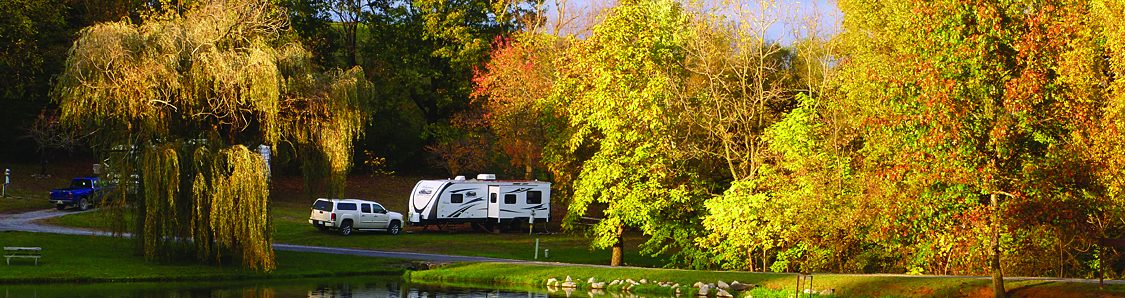
RV park is really a cheap trailer court

RVtravel.com had a curious little story this past week headlined “Idaho: A little RV park draws plenty of opposition.” I call it “curious” because the article glided right over the central issue to fixate on the “tempest in a teapot” nature of a two-year battle waged by a developer to build a tiny 20-site RV park on 4.17 very rural acres. As the article points out, this is an extremely modest proposal that readily meets or exceeds all relevant county standards—so how come there’s a groundswell of local opposition, including a court challenge, in a state better known for its libertarian, live-and-let live inclination?

Maybe it has something to do with the ongoing trend of cheap housing developments masquerading as RV parks.

Not that there’s any mystery about what’s going on. When Idaho Land LLC filed its application with Bonner County for a conditional use permit, it was completely aboveboard about its intentions. “Our mission is to provide affordable housing for members of our community,” the application states. “With Idaho being the fastest growing state by population, and Bonner County growth projected to be 2.25% annually, the park will provide transitional housing for those migrating to north Idaho and provide a low income housing option for current residents who are combating rising housing prices in the area.”

As the application also notes, “The park is in alignment with the counties [sic] goal of providing affordable housing options in an area with adequate public and private services provided.” And, again: “The park will provide alternate low income housing options for residents in accordance with the goal of providing adequate shelter regardless of age, income or physical ability.”

There are at least a couple of problems with these frank assertions, starting with the obvious question of why anyone would call this an “RV park.” This is as bare-bones a “park” as one can imagine, the site plan showing little more than an oval gravel road with 20 full hookup back-in sites, a “laundry facility” and a dumpster. No bathhouse, no registration office, no campstore or playground or any other kind of structure or amenity, for that matter, and apparently no staff . This is basically a trailer park for RVs.

But Bonner County’s zoning regulations, while limiting occupancy of RVs on residentially zoned land to 120 days, specifically exclude RV parks from that limitation. Indeed, the county’s extensive rules about RV parks are inexplicably silent on that one question, even as the rules acknowledge that RVs are “primarily designed as temporary living quarters.” Meanwhile, the county’s zoning regs allow only one RV per residential lot unless a conditional use permit is granted. Opposition to the Idaho Land proposal is based in part on the contention that because it’s looking to provide a residential facility rather than a recreational one, the one-RV-per-lot limitation should be applied.

Not so, argue Idaho Land and its representative, Stephen Doty. “I’m not applying for dwelling units,” Doty was quoted as saying by Rvtravel, ignoring the application’s clear assertions about housing. “I’m applying for an RV park permit to operate an RV park.”

The idea that simply calling something an RV park makes it so, regardless of how the land will actually be used, is troubling enough. But the wider issue here—and one that should concern an industry that increasingly claims to be part of the “hospitality industry”—is the growing acceptance of RVs as residential options (as I’ve written before, here, here and here, among many, many other posts). As I’ve stressed before, and as industry manufacturers likewise feebly maintain, RVs are not built to residential standards. Think what you will about the cardboard walls and minimal insulation of house trailers, they at least have to conform to HUD standards that RV manufacturers can blithely ignore.

But trailer parks have acquired a disreputable reputation, which means no one is in a rush to build more of them, while RV parks still retain a feel-good image. Moreover, the campground industry clearly wants some of that action, too. Thanks to a real estate crunch that has made affordable housing increasingly scarce, demand for monthly RV sites has gone through the roof, convincing a growing number of RV parks to convert transient sites into long-term ones. And why not? Long-term sites mean predictable and steady income; with less turnover, they also allow for lower staffing levels and fewer amenities than are expected by a recreational customer base. The bare-bones Bonner County proposal is only the logical outcome of this trend taken to an extreme.

Yet as I wrote quite recently, this is a trend that will come back to bite the industry in the butt. The kicker is that the industry knows this—it just seems incapable of doing anything about the slow-moving train wreck it has created for itself. As Dyana Kelley, executive director of the California Outdoor Hospitality Association, recently acknowledged, “If we look like and act like low-income housing, then that is how we will be perceived and regulated.” Bonner County, in approving the Idaho Land application last week, simply pounded one more nail into that coffin.

CalOHA has lost sight of its roots

Here’s a rule of thumb for understanding how well an organization can identify its core mission: the more abstract and non-specific its name, the more muddled its messaging and the more unmoored its members become.

Take, for example, the California Travel Park Association (CTPA), birthed in 1975 with a name that identified its geographic focus (California) and the nature of its membership (an association), but most critically its constituents: travel parks—what we think of today as campgrounds and RV parks, and most definitely not trailer parks.

Thirty-three years later, however, CTPA had become a member of the National Association of RV Parks and Campgrounds (ARVC), and in a fit of solidarity, renamed itself the California Association of RV Parks & Campgrounds, or CalARVC. Fair enough. But when it decided in 2019 that it no longer wanted to have anything to do with ARVC, CalARVC had to change its name again—and thus was born the word salad known as CampCalNOW RV Park and Campground Alliance. No explanation for the bold “NOW.” No explanation for the conversion from association to alliance, either, or what that meant, but at least the RV parks and campgrounds were still getting acknowledged.

But fast-forward another three years, and it’s obvious someone got tired of lugging around that ponderous name plate. Or as explained on its website, “In 2022 CampCalNOW reexamined its branding and how that measured up with the associations [sic] goals for the future, taking into account the complexity of today’s advocacy efforts and the importance of unity within our industry, and settled on today’s name, the California Outdoor Hospitality Association.”

Back to being an association? Check. A continued focus on California? Check. But “RV parks and campgrounds”? Gone. Tossed into the same semantic trash heap that had already claimed “travel parks,” replaced by the mealy-mouthed “outdoor hospitality” umbrella.

So who cares? What difference does it make?

To answer that, mull over the muddled and even incoherent call to arms issued by CalOHA president Dyana Kelley this past week. In a message distributed to her members and published in RVBusiness and Woodall’s Campground Magazine, Kelley obscurely laments what she describes as “RV parks . . . being bookended into a death spiral,” with the following introductory paragraph, copied here in its entirety (including missing punctuation):

“Historically, RV parks and campgrounds tend to fly under the radar avoiding some of those bills that wreak havoc on our counterparts, in the mobile home space however as more RV parks are moving to an extended stay model our industry is now suddenly being included in everything from Narcan dispensing, fee transparency, rent control, affordable housing bills and even updating the Special Occupancy Parks Act (SOPA).”

Which, if I understand her correctly, means that Kelley acknowledges that her state’s RV parks increasingly are less about “outdoor hospitality” and more about being residential facilities—trailer courts more than travel parks. But that’s a problem, because state legislators therefore increasingly expect RV parks to conform to the same regulations as are applied to mobile home parks. All that those myopic legislators see, Kelley wrote, “is parks filled with long-term residents. Without context, independent RV parks have taken on the look of affordable housing but what isn’t seen is that parks provide a service to the community,” she continued. “They house teachers for a season, line workers bringing new power, traveling nurses and even state legislators.”

In other words, what’s important is not how long someone lives in an RV in a particular facility, but why. Rules about fee transparency or Narcan dispensing or what-have-you should be applied only to those parks or campgrounds where people are living because that’s what they can afford, not so they can “provide a service to the community.” Or as Kelley explicitly notes, “Little understanding is given to the ‘intent’ by which a traveler chooses to stay at a park, and they [state legislators] are blissfully ignorant of the role RV parks play in supporting travel and tourism during the winter months when our parks fill with snowbirds.”

There are so many things wrong with this convoluted logic that it’s hard to figure out where to start unpacking it. There is, for starters, the astonishingly frank admission that California’s RV parks are in fact, and by choice, becoming less recreational and more residential in nature—yet in CalOHA’s view, at least, those parks should not have to comply with residential regulations despite that evolution. That’s like saying that the rules allowing a small home business to operate in a residential area should still apply when it becomes a large workshop, and then a small factory. At what point do we acknowledge that a shade-tree mechanic has become a full-service garage, or that a seamstress is now operating a dress shop and fabric store?

Then there’s Kelley’s fallback position, which in essence amounts to a thorny “intent” litmus test. We have to ask “why” all these people are staying nine months or a year or two years in the same RV park, and depending on the answer, may conclude that normal residential rules should not apply to a particular RV park despite the appearance of permanence. Just how that determination would be made, Kelley hasn’t said. Nor has she indicated what minimum number of “community service” residents would be sufficient to give an RV park a pass: 20% of the residents? 50%? 70%?

There’s lots more than can be said, but I don’t want to get snarky. Suffice to say that what it all boils down to is that CalOHA and its members apparently want to have their cake and eat it, too: to “fly under the radar” as campgrounds without having to conform to the same rules as their “counterparts in the mobile home space,” even as they increasingly—even blatantly—get “filled with long-term residents.” But while there are numerous reasons for this shifting business model, it’s all made easier by the fact that CalOHA has taken its eye off the ball. Instead of pushing back against the adulteration of its original brand—of promoting RV parks and campgrounds qua RV parks and campgrounds, not as alternative housing—CalOHA has embraced the vacuous notion of “outdoor hospitality.”

Which, apparently, means whatever CalOHA says it means.

Most recent posts

RV parks on the firing line, literally

The Oak Fire in Mariposa County, California, now at 17,000 acres and rapidly growing, started just 10 days after a public hearing in which the state’s RV park and campground operators complained about the lack of affordable fire insurance. The California FAIR Plan (for “Fair Access to Insurance Requirements”) was established to ensure that property owners would still be able to buy basic fire insurance when commercial policies are either too expensive or simply unavailable. But what do you do when your lifeboat also is being swamped?

Described by the fire battalion chief as “really unprecedented” because of the speed with which it is ravaging the landscape, the Oak Fire underscores the degree to which insuring against fire losses in California is as problematic as insuring against hurricane damage on the Carolinas’ Outer Banks. You know the storms are coming, you know they’re getting bigger and more frequent and more destructive with each passing year, and if you’re an insurer you know with utter certainty that they’re going to bleed you dry. No surprise, then, that California’s private insurers have been jacking up their premiums by 20% to 40% a year or more-or not underwriting new policies at all.

That’s where the FAIR Plan is supposed to step in, with the state’s private insurers holding down premium costs by pooling their risks and providing barebones coverage. FAIR is not intended to replace regular insurance policies: it’s a safety net, an insurer of last resort. But even a safety net is not immune to the same risks that make insurance unaffordable in the first place, which means that the FAIR Plan’s premiums also have been skyrocketing, even as the coverage it offers has become skimpier.

So the July 13 public hearing quickly became a platform of grievance for the California Outdoor Hospitality Association (COHA), representing the state’s privately owned RV parks and campgrounds. COHA chair Dyana Kelley complained that unaffordable insurance rates would put campgrounds, RV parks and hotels out of business while driving up the cost of travel throughout California, chasing tourists to other states. Moreover, the coverage provided by the FAIR Plan is too limited, covering only four of the 11 specific insurance risks or perils found in a typical property policy.

Okay. Arguable points all, if still leaving unaddressed the question of who gets dunned for the higher costs COHA would like to see the FAIR Plan absorb–costs, if the private sector bows out, that would have to be covered by taxpayers. But then Kelley added a twist that amounted to little more than a naked grab. “As an industry, we are being tasked with expansion,” she told the hearing, as if the state’s campground operators were on some kind of holy mission. “We have more camping consumers than we have accommodations, yet one of the greatest barriers to entry into our industry is the ability to obtain insurance with appropriate coverage at reasonable rates.”

Actually, no. One of the greatest barriers to entry is a tinderbox of a landscape that makes “business as usual” a fond memory, never mind expanding that business to put even more people–those beloved tourists–and campground infrastructure in harm’s way. What Kelley and her constituents are suggesting is tantamount to building in a floodplain or on an eroding shoreline, then complaining that they just can’t afford to pay for the insurance coverage that they inevitably will need. Maybe don’t build there in the first place?

The question of what to do about existing campgrounds and RV parks that are on the firing line–some in place for decades–is a thorny one, and deserving of reasoned analysis and decision-making. But it has to start with an understanding that much has changed in those decades, and that insisting on more of the same is a non-starter. No one is “tasking” the industry to expand; if anything, it should be contracting. While there’s still time.

Most recent posts