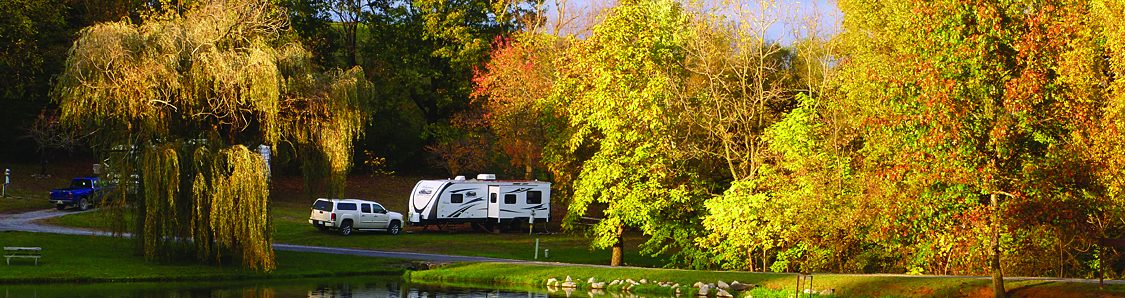
For RVers, the outdoors is a war zone

Tornado aftermath May 26 at the Lake Ray Roberts Marina RV Park, just north of the Dallas-Fort Worth area.

One of the more insipid refrains the RV park and campground industry is prone to repeating is that it’s in the business of “creating memories.” These days, alas, those memories may start convincing a growing number of RVers that there has to be a better way to spend their vacation time.

The Memorial Day weekend was notable for tornados that essentially wiped out at least two RV parks, in Texas and Oklahoma, but at least three other campgrounds preceded them this year alone: Florida Caverns RV Resort, hammered in January; an RV park east of Madison, Indiana, blasted by an EF2 tornado in mid-March; and a campground at Hanging Rock in southern Ohio in early April that also got thumped. All sustained serious damage, but the violence this past weekend took matters to a whole new level.

At the Will Rogers Downs KOA in Claremore, northeast of Tulsa, an EF2 twister slammed into a campground that had 146 occupied sites, converting an Airstream trailer into a silver bullet that flew the length of a football field, flipping large motorcoaches and tearing apart travel trailers. That same Saturday, 220 miles to the south-southwest, an EF3 tornado made mincemeat out of the Lake Ray Roberts Marina and its 47-site RV park, just five years old, leaving a half-mile-long debris field. That no one was killed at either campground was simply a matter of luck: both twisters hit at night, with campers given no advance warning. And while the Oklahoma park has a storm shelter, not everyone managed to reach it in time.

May tends to be peak tornado season, with such storms declining in frequency through June and into July. But that doesn’t mean the danger they pose is entirely over—and as their threat diminishes, their big cousins are just stepping up to the plate. Hurricane season typically runs from June 1 to Nov. 30, and aside from being themselves a significant threat to coastal areas and as much as 200-300 miles inland as far north as Maine, hurricanes also can spawn tornadoes. Meanwhile, 2024 promises to be one of the most active hurricane seasons on record, with the National Oceanic and Atmospheric Administration forecasting eight to 13 hurricanes, including four to seven “major” hurricanes, with winds of 111 mph or higher.

None of that sounds like picnicking weather, nor does the less dramatic but even more deadly cause of all that turbulence, a rapidly warming atmosphere above and oceans below. Heat-related deaths have been rising steadily since 2014, and the number of extreme heat days in some states is now five times higher than 40 years ago. So the American southwest, while relatively safe from tornados and hurricanes, actually kills far more people than either of those headliners simply by baking them to death. Phoenix last year had 54 days when temps hit 110 or more; Maricopa County, which includes Phoenix, had 645 heat-related deaths in 2023.

(Pity poor Houston, which gets a triple whammy of hurricanes, tornadoes and excessive heat: this past weekend it broke all records by registering a heat index of 115 degrees. In May.)

Given the above extremes, it’s hard to think of a more inappropriate shelter in which to confront the elements than an RV. These boxes on wheels become ovens in a heartbeat if they lose power with which to run their air conditioners, and they’re far more vulnerable than most housing to the baseball-sized hail that’s seemingly ever more common throughout the South and Midwest. Staple-and-glue construction techniques used to assemble cheaper rigs, be they travel trailers or class Cs, guarantee they’ll crumple or fly apart under even a moderately vigorous shaking. And even the most solid fifth-wheels or motorcoaches present sail-like silhouettes to winds strong enough to flatten commercial buildings, never mind dwellings that have only four unanchored points of contact with the ground.

Yet despite these obvious and growing vulnerabilities, the RV industry does nothing to alert the public to the heightened risks it takes when camping in certain areas at certain times. Indeed, it has been positively euphoric when announcing in recent weeks that 45 million Americans “are gearing up for RV adventures this summer,” with an industry chief marketing officer crowing that RVing “offers a unique combination of freedom, adventure and value” and an opportunity to . . . wait for it . . . “create unforgettable memories.” Indeed. Matt and Anna Conners, quoted in numerous news stories, undoubtedly will long remember the night they had to pound on the doors of a storm shelter at the Will Rogers Downs KOA to escape the tornado that flipped their Coachmen Class A.

But it’s not just campers who are being led down the primrose path—so are campground owners, who tend to be blasé about the risks they face, dismissive of climate change warnings and oblivious to how quickly the overall weather outlook is deteriorating. The Lake Ray Roberts Marina RV park, which as mentioned above was opened a mere five years ago, lies just north of Denton, Texas, and right at the base of the area with the highest average number of tornadoes per year, as indicated on the map below. That apparently didn’t dissuade anyone from building the campground, and apparently wasn’t ominous enough to prompt the CYA construction of an underground storm shelter.

Meanwhile, as I wrote earlier this month, a similar indifference to facts on the ground has enabled ongoing planning for a $2 billion-plus amusement park and RV park with more than 1,000 sites and cabins in northwest Oklahoma—just at the edge of that deep maroon blob in the middle of the map. How different is that from building a tourist attraction on the lip of a dormant but not extinct volcano?

The problem is not that people with too much money and not enough sense are indulging in such follies, but that their willingness to do so creates a misleading sense of normalcy for other people who are just looking to have a good time—or even, heaven help us, who are hoping to “create memories.” Some significant portion of them will get more than they bargained for.

What we should learn from Otis

One week after eviscerating the tourist mecca of Acapulco, Mexico, Hurricane Otis is assured of long-term notoriety for two reasons. The first is its sheer ferocity: a Category 5 monster with gusts of up to 205 miles an hour, Otis ripped apart large high-rises, claimed at least four-dozen lives, severed all water, electricity and internet service and left a tattered landscape of denuded trees and streets jammed with mud and debris.

But the second reason for Otis’s historic significance is the speed with which it ramped up. When Acapulco’s residents went to bed Monday night, they expected no more than a tropical storm, with maximum winds of 60 miles an hour. Yet within 24 to 30 hours (Otis made landfall at 12:25 a.m. Wednesday) the storm’s winds had gained more than 100 miles an hour, a virtually unprecedented rate of strengthening that caught forecasters off guard—and a city of 800,000 flat-footed and unprepared.

In some ways, however, none of this should have been a surprise. Climate scientists have warned of just such rapid intensification for at least six years, starting with a 2017 paper titled, “Will global warming make hurricane forecasting more difficult?” Nor is this a problem limited to the Pacific basin, where El Niño gets a lot of blame for spawning Hurricane Hilary in August—the first tropical storm to hit California since 1939—and now Otis. Just two weeks ago a New Jersey-based researcher published a paper contending that “quickly intensifying tropical cyclones are exceptionally hazardous for Atlantic coastlines.”

The number of tropical cyclones (aka hurricanes) in the Atlantic that intensify from category 1 (or weaker) into category 3 (or higher) within 36 hours has more than doubled over the past couple of decades, according to the author, Andra J. Garner. “Many of the most damaging tropical cyclones to impact the U.S. in recent years have been notable for the speed at which they have intensified,” Garner added, in part because such rapid development “can create communication and preparedness challenges for coastal communities in the storm’s path.” Translation: hurricane-prone coastal areas that once could have a week’s advance warning of a brutal storm may now have only a day or two.

Public recognition of this changing reality, however, is sadly lagging. This cognitive dissonance is notably on display when municipal planners and private developers get to talking about RV parks and campgrounds, which all too often are seen as suitable for low-lying and flood-prone areas that would never get approved for residential development. RVs, goes the thinking, have wheels—what could be simpler than to pull them out of harm’s way? No harm, no foul, and otherwise “wasted” land can be put to productive use.

Just such a rationale was evident in Citrus County, Florida, where opposition to a proposed glampground was based, in part, on concerns about the low-lying coastal area’s vulnerability to hurricanes. Pish-posh, retorted Stephen Hill, a glampground supporter, who claimed in a letter to a local newspaper that “the tourist industry stays a week or more ahead of storms” and so has plenty of advance notice of a potential problem. “All visitors will be off the property well before locals, who tend to delay, decide to evacuate,” he added.

Similarly, in the North Carolina town of Leland, a proposal earlier this year to allow RV parks in flood hazard zones came with a suggestion that such sites “have a sign indicating that the RV shall be removed from the site within 24 hours of the town declaring a state of emergency for a potential flooding event.” The town eventually agreed to allow RV parks in the flood-prone areas—but also apparently decided such warning signs would not be necessary, perhaps because they would have created some liability for the town if it failed to give timely notice of “a potential flooding event.” Instead, caveat emptor!

The problem with both rationales, as Otis underscores, is that there is no longer any assurance that the tourist industry can stay a week ahead of storms, or that a town could declare a state of emergency more than 24 hours in advance of a cataclysmic rainfall or hurricane. Tropical cyclones, it’s becoming clear, can sweep in as suddenly as a forest fire, a week-long life-cycle compressed into mere hours. Wheels or no wheels, in such circumstances an RV can be just as much a sitting duck as any bricks-and-mortar dwelling.

None of this is to say that an RV is a preferred shelter anywhere when a Cat-Five storm hits; as photos of see-through high-rises in Acapulco attest, even the sturdiest of buildings can be stripped down to its skeleton by such winds, never mind a tin-can of a home that quite literally can be kicked down the road. But that doesn’t justify adding another layer of risk by putting those tin cans on land that we know will flood because, you know, they can just roll out of the way.

On Ellsberg, Exxon and RV expenses

As significant swaths of the country swelter under heat domes and wet-bulb temperatures that run into triple digits, a growing number of Americans may find themselves wondering at all the fuss about “the great outdoors.” And if the heat isn’t enough of a deterrent, there’s the lung-searing smoke from more than 500 Canadian wildfires that are expected to burn for several more months and that already have consumed an area the equivalent size of South Carolina.

All of which prompts, on this date celebrating independence, two unrelated but parallel thoughts.

The first is that we owe a debt to Daniel Ellsberg, who died a couple of weeks ago at the age of 92, for more than his leaking of the Pentagon Papers. Long after that pivotal point in political history, Ellsberg was still prodding American journalists to look beyond the surface of current events. And one of his most consequential nudges, as recently recounted by David Sassoon, founder and publisher of Inside Climate News (ICN), was to insist that the press needed to expose what the oil companies really knew about global warming and when they knew it.

That challenge led directly to ICN’s 2015 publication of a 24,ooo-word investigative series called “Exxon: The Road Not Taken,” that chronicled how the oil company’s own scientists had warned its management committee that burning fossil fuels was warming Earth’s atmosphere. That was in 1977—more than a decade before NASA scientist James Hansen famously told the U.S. Senate, ““The greenhouse effect has been detected, and it is changing our climate now.” Yet in the 46 years since its own employees rang the alarm, Exxon did more to change the political climate than to preserve the natural one, casting so much doubt on climate science to protect its own financial interests that there are people who to this day deny the evidence of their senses.

Sooner or later, reality will prevail. Rising seas, shrinking glaciers, increasingly erratic and extreme weather will not be wished away. Whether Exxon and its ilk will be held accountable is an entirely different question, of course, but thanks to Ellsberg and those he inspired, the ammunition is there if anyone cares to load it. Meanwhile, however, we can count on the Exxon effect as being one of at least two major causes behind the coming demise of camping as an attractive pastime or lifestyle: who wants to take on energy-sapping heat and life-threatening air pollution if there are air-conditioned alternatives available? Cracked earth, curling leaves and brown air do not evoke poetry. Torrential rains, hail the size of golf balls and tornadic winds don’t soothe the soul.

Yet punishing weather is only half of the picture. The other major cause behind the coming decline in camping is that it’s become just too damn expensive, even as its growing financial burden falls on the demographic least able to shoulder the load. Camping industry leaders have been inordinately giddy over survey results that show the average age of RV buyers last year was 33, signaling—in their eyes—the revitalization of an industry that had been in danger of aging out: move over, grandma and grandpa! The millennials have arrived and they’ll save the day.

But maybe not. Consider that the RV Dealers Association reports that the average RV sold in May went for $51,896, with most of that amount financed over 16 years at a 9.61% interest rate. That works out to a monthly payment of $517, often coming on top of a mortgage and car payments—and oh, yes: student loan payments, which are about to kick in again after a three-year hiatus. That’s a huge bite for a discretionary purchase, even as overall U.S. household debt has spiked to $17 trillion, including a record $986 billion in credit card debt—up 17% in just 12 months. Does that sound sustainable? And if not, what does that imply for future growth?

Couple those financial stresses with KOA’s statistic that two-thirds of all first-time campers are less than thrilled with the experience, and the outlook for campground operators is grim. Industry leaders have tried to reframe these adverse forces as “pain points,” which is to say, as marketing and customer service challenges that can be massaged away, but it would be more accurate to call them existential threats. There’s no massaging—or messaging— away either the financial burden or the climatic oppressiveness that increasingly defines the camping experience, and that’s without even getting into the increased prices and gentrification of commercial campgrounds, the notoriously shoddy construction of many new RVs or the apparently growing boorishness of a significant segment of the camping public.

Old-timey RVers like to think of themselves as independent spirits, and at one time that may have been more true than not. But on this Independence Day, all signs point to such a halcyon camping age being as much a part of history as the Revolutionary War. Campground owners, meanwhile, would be well advised to brace themselves for the coming drought.

Most recent posts

RV chickens coming home to roost

This may sound harsh, but the campground industry has an enormously uncomfortable relationship with Mother Nature: like the victim of an abusive spouse, it prefers not to acknowledge that there is a dark and sometimes violent side to its partner.

Two days after passing around a tin cup for donations to help campgrounds getting swamped on the West Coast, the National Association of RV Parks and Campgrounds (ARVC) was at it once more, this time on behalf of campgrounds at the opposite end of the country. Proclaiming yet again that “When natural disasters strike, it’s in our nature to help,” the solicitation summarized the situation as follows:

At least eight people were killed on Thursday as severe storms and tornadoes left a trail of damage across the South. Ferocious winds sent residents running for cover, blew roofs off homes and knocked out power to thousands. The storms damaged power lines, severed tree limbs and sent debris flying into streets in Alabama, Georgia and Kentucky, where at least 35 preliminary tornado reports were recorded as of Thursday evening, according to the Storm Prediction Center.

All of which undoubtedly was true, as was a similarly generic recitation about the West Coast disaster—but in neither description was there any mention of an actual RV park or campground. The reader is left to assume that campgrounds were damaged, which is quite likely, but how many campgrounds or to what extent is left to the imagination. There are no human faces put on the tragedies for which ARVC is seeking a compassionate response, for the simple reason that ARVC doesn’t know them—nor does it really want to know them. Much better to leave this all on an abstract level.

That may sound harsh, but it speaks to the enormously uncomfortable relationship ARVC, and perhaps a majority of its members, have with Mother Nature. Like the victim of an abusive spouse, the campground industry prefers not to acknowledge that there is a dark and sometimes violent side to the relationship. Yes, there are problems, but we’ll keep those to ourselves—regardless of how unsustainable that may be—while presenting only a sunny face to the public. Anything else might be bad for business.

What throws this dynamic into sharp relief is the ironically concurrent news in the journal Science, published yesterday, that scientists at ExxonMobil “predicted global warming correctly and skillfully” more than 40 years ago. The peer-reviewed study found that Exxon’s scientists made remarkably accurate projections of just how much global warming would be increased by burning fossil fuels—“as accurate, and sometimes even more so, as those of independent academic and government models,” reported the New York Times this past Thursday.

Exxon’s corporate suite, no surprise, quickly put the kibbosh those several decades ago on its own research, casting doubt on its scientists’ work and cautioning against any move away from carbon-based fuels. Global warming projections “are based on completely unproven climate models or, more often, on sheer speculation,” the oil company’s chief executive assured a company annual meeting in 1999. “We do not now have a sufficient scientific understanding of climate change to make reasonable predictions and/or justify drastic measures,” he wrote in a company brochure the following year

ARVC, whose members rely on customers who drive vehicles of unenviable gas consumption, was only too happy to fan the embers of skepticism. Calls to reduce greenhouse emissions were premature, it declared in a 1998 policy, because of the “considerable uncertainty surrounding the theories on climate change.” What was needed, ARVC contended, was “more research, data collection and scientific analysis”—although presumably not by scientists employed by ExxonMobil. And guess what? Nearly a quarter of a century later, ARVC’s policy remains unchanged, as mired as ever in “considerable uncertainty,” even as its members watch helplessly as their campgrounds get inundated, leveled and swept away by pounding seas, tornadoes, mud slides and thousand-year storms.

And the tin cup gets passed around yet again.

To be clear, asking help for those unfortunate enough to be home when the chickens come to roost is both admirable and necessary. It’s just not enough. Aside from the disproportionate ratio of need to available resources, it doesn’t deal with the underlying problem. It doesn’t answer such fundamental questions as: who’s at risk? can that risk be managed? if not, what’s the alternative? is the current campground business model sustainable? if not, what changes—if any—can make it so? It essentially ensures that without such questions being asked, the pleas for help will only grow more bigger and more frequent.

One place to start changing this vicious spiral would be for ARVC to create a reporting system so it can quickly identify which campgrounds and RV parks may be affected by the latest extreme weather disaster—to put a face on the victims. Another would be to revisit its 1998 policy, in light of the past 24 years of “research, data collection and scientific analysis,” and figure out what a meaningful revision might look like. Yet another would be for ARVC to promote discussion among its members of a common threat, so it’s no longer seen as a taboo subject, the bogeyman whose name must not be uttered.

Most of all, it would help if ARVC and its members simply acknowledged that the love of their lives is sometimes abusive. The first step on the road to recovery, as any 12-step program participant will tell you, is to acknowledge that your life has become unmanageable.

Most recent posts

Manchin, scorpions do what they do

Just a bit more than five weeks ago, the RV Industry Association demonstrated either its hypocrisy or its gullibility by presenting its “National Legislative Award” to Senator Joe Manchin of West Virginia. The association justified this astonishing misstep by claiming that Manchin “recognizes that investments in outdoor recreation are vital to our economic, emotional and societal well-being,” those “investments” devoted largely to the “recreation” half of the “outdoor recreation” dyad.

The “outdoor” half? Not so much.

Indeed, as I posted June 10, Manchin arguably is the one person most directly responsible for torpedoing this country’s efforts to combat global warming and the calamitous climate change it is causing. That he would undermine any efforts at breaking our fealty to carbon-based energy sources is only to be expected, given the significant extent to which Manchin’s political and personal fortunes are tied to coal, gas and oil interests. No one playing with a scorpion should be surprised when it stings.

What is surprising is the cringe-inducing meekness with which the Democrats have tiptoed around Manchin’s constantly shifting rationale for being an obstructionist, avoiding confrontation for fear of giving offense, meekly giving up on one proposed initiative after another in a vain attempt to win an acquiescence that was never forthcoming.

Two days ago, Manchin abruptly made official what any objective observer would have concluded several months ago: he will not support any funding for climate or energy programs, nor support raising taxes on wealthy Americans and corporations to pay for such programs. As “explained” by a spokeswoman, “Senator Manchin believes it’s time for leaders to put political agendas aside, re-evaluate and adjust to the economic realities the country faces to avoid taking steps that add fuel to the inflation fire.”

Instead, thanks to a man who represents a state of 1.8 million people in a country of 320 million who overwhelmingly support climate change policies, we’ll continue adding real fuel to the fire in the sky.

Texas is baking in a record heat wave that incidentally is producing the worst smog pollution in at least a decade, which makes “outdoor recreation” an oxymoron. The entire western expanse of the country is a tinder box, producing not only a bumper crop of wildland fires but further depleting already record-low water supplies in a process called aridification, a/k/a drought on steroids. And it’s not just the U.S. Glaciers are collapsing in Italy and Kyrgyzstan, Britain has issued its first-ever heat red alert for this coming Monday and Tuesday, and wildfires are breaking out across southern Europe, forcing thousands to evacuate.

Dealing with a crisis of such proportions is not a “political agenda,” as Manchin’s spokeswoman would have it–it’s a matter of life and death. That a member of what’s mistakenly been called “the world’s greatest deliberative body” should ignore such a self-evident reality is tragic. That the RVIA and similar self-serving organizations would act as his cheerleaders is contemptible.

Most recent posts