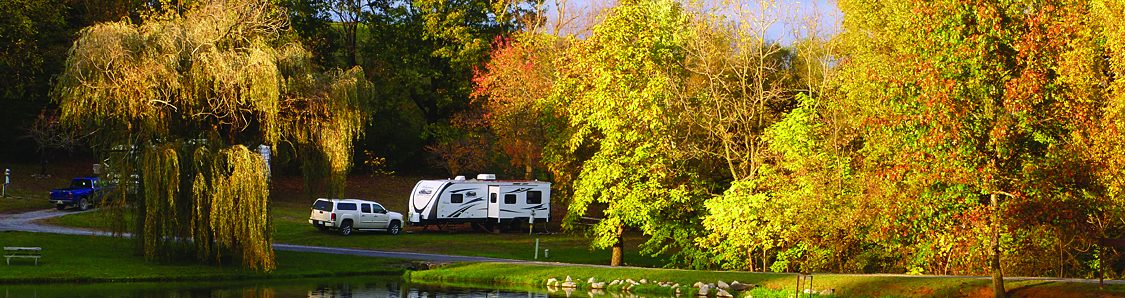
A perfect storm of bad ideas with potentially catastrophic consequences is shaping up in central Oregon, where the already struggling Family Motor Coach Association plans to have a four-day international convention and RV expo. The association, which has been hemorrhaging members for years but still advertises itself as “the world’s largest nonprofit association for recreational vehicle owners,” said it expects more than 700 RVs to converge on the Deschutes County fairgrounds in Redmond on Aug. 14.
Well, maybe.
Such events are planned months and even years ahead of time, so FMCA’s leadership might be excused for not knowing it would be hosting a party in a pizza oven. Then again, this is hardly unexpected. California is getting the most wildfire press at the moment, principally because its Park Fire has grown to more than 400,000 acres and is now the fourth largest in that state’s history. But Oregon is even more of a wildfire hotspot, with twice as many large active fires as its southern neighbor (25 versus 13), and this year already has had more than 973,000 acres scorched. Only two of those wildfires have been contained. The convention’s theme, “Adventure Peaks,” may have more of a dark meaning than originally intended.
You might argue that a million acres is only a small fraction of Oregon’s total land mass of roughly 61 million acres, so what are the odds that your campground will be next to go up in flames? But of course it’s not just a question of whether RVers will have a direct encounter with a fire, but whether they’ll also have to breathe its exhaust. Wildfire smoke has become an annual scourge across all of the western U.S. and Canada, and as it becomes more common, its effects on human health are getting closer scrutiny—with dismaying early findings. One recent study, for example, attributed more than 50,000 premature deaths to wildfire smoke exposure; the risk of cardiac arrests for people who have cardiovascular issues increases 70% during days with heavy smoke.
And here’s a truly sobering warning for the RVing demographic most prone to attend FMCA get-togethers: according to a decade-long study involving more than one million southern California residents, released just a few days ago, exposure to wildfire smoke poses a 21% increase in the risk of being diagnosed with dementia compared with other types of air pollution. The dangers, in other words, aren’t just respiratory or cardiac. Wildfires that tear through manmade structures, vehicles and other non-wild fuel emit smoke that contains a toxic brew of chemical compounds; its aerosolized particles, meanwhile, enable those poisons to infiltrate every part of a human body.
Nor is this sort of hazard something unusual—just the opposite. A much-publicized report this past week from The Dyrt, an online camping reservation platform, disclosed that 18% of campers reported that wildfires or other natural disasters disrupted their camping plans last year, or triple the rate of 2019. Such disruptions are even more common on the West Coast, where fully one-third of campers had their plans interrupted in 2023—as did an even larger 42% in Oregon and Washington. Ironically, The Dyrt is headquartered in Oregon, “so we’ve seen firsthand the toll wildfires have taken on the Pacific Northwest,” The Dyrt’s chief executive, Kevin Long, wrote in releasing the study. “It’s scary and tragic for so many reasons.”
For all that, however, Oregon in general and Deschutes County in particular have been grappling with proposals for several new RV parks as well as rules to allow RVs to be used as permanent rental housing. Those efforts have been given additional impetus by the U.S. Supreme Court’s decision in June upholding an Oregon town’s ban on homeless residents sleeping outdoors, which among its unintended consequences has increased the pressure on elected officials to find housing alternatives—and what’s cheaper (and more flammable) than an RV? The unresolved problem, of course, is finding a home for those RVs that’s not a city street or highway underpass.
None of this is going down well with Deschutes County residents, many of whom turned out this past week for a county commissioners’ meeting to excoriate a proposed 300-site RV campground that the county wants to build just north of Bend, at least in part as a low-cost housing solution. In addition to the standard worries about water, sewage and roads, objections also centered on growing concerns about an influx of the homeless and of an increasingly volatile natural landscape. “We need to start controlling sources of combustion out there, whether it be the homeless, people in campgrounds or fireworks,” one attendee told the board, summing up the powder-keg nature of the RVing phenomenon.
Meanwhile, a luxury RV resort being built on the other side of town, southwest of Bend, was originally scheduled to open this past spring but has been delayed repeatedly. A soft-opening of the 176-site property, the Bend RV Resort, is now projected for later this month, just in time for Labor Day—and well into the fire season. At $120 a night, this clearly is not an RV park that’s targeting the homeless as its customer base. Given current events, however, it’s also an RV park with an uncertain future—as, indeed, is true of summer camping overall.
Most recent posts
Most recent posts



 Renting Dirt