What we should learn from Otis

One week after eviscerating the tourist mecca of Acapulco, Mexico, Hurricane Otis is assured of long-term notoriety for two reasons. The first is its sheer ferocity: a Category 5 monster with gusts of up to 205 miles an hour, Otis ripped apart large high-rises, claimed at least four-dozen lives, severed all water, electricity and internet service and left a tattered landscape of denuded trees and streets jammed with mud and debris.

But the second reason for Otis’s historic significance is the speed with which it ramped up. When Acapulco’s residents went to bed Monday night, they expected no more than a tropical storm, with maximum winds of 60 miles an hour. Yet within 24 to 30 hours (Otis made landfall at 12:25 a.m. Wednesday) the storm’s winds had gained more than 100 miles an hour, a virtually unprecedented rate of strengthening that caught forecasters off guard—and a city of 800,000 flat-footed and unprepared.

In some ways, however, none of this should have been a surprise. Climate scientists have warned of just such rapid intensification for at least six years, starting with a 2017 paper titled, “Will global warming make hurricane forecasting more difficult?” Nor is this a problem limited to the Pacific basin, where El Niño gets a lot of blame for spawning Hurricane Hilary in August—the first tropical storm to hit California since 1939—and now Otis. Just two weeks ago a New Jersey-based researcher published a paper contending that “quickly intensifying tropical cyclones are exceptionally hazardous for Atlantic coastlines.”

The number of tropical cyclones (aka hurricanes) in the Atlantic that intensify from category 1 (or weaker) into category 3 (or higher) within 36 hours has more than doubled over the past couple of decades, according to the author, Andra J. Garner. “Many of the most damaging tropical cyclones to impact the U.S. in recent years have been notable for the speed at which they have intensified,” Garner added, in part because such rapid development “can create communication and preparedness challenges for coastal communities in the storm’s path.” Translation: hurricane-prone coastal areas that once could have a week’s advance warning of a brutal storm may now have only a day or two.

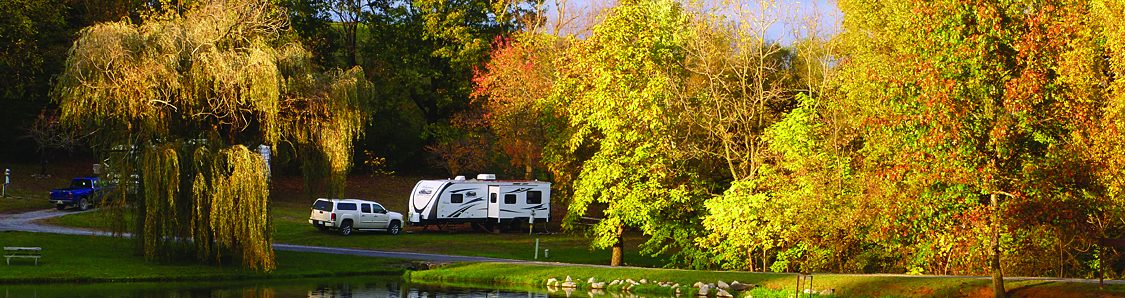
Public recognition of this changing reality, however, is sadly lagging. This cognitive dissonance is notably on display when municipal planners and private developers get to talking about RV parks and campgrounds, which all too often are seen as suitable for low-lying and flood-prone areas that would never get approved for residential development. RVs, goes the thinking, have wheels—what could be simpler than to pull them out of harm’s way? No harm, no foul, and otherwise “wasted” land can be put to productive use.

Just such a rationale was evident in Citrus County, Florida, where opposition to a proposed glampground was based, in part, on concerns about the low-lying coastal area’s vulnerability to hurricanes. Pish-posh, retorted Stephen Hill, a glampground supporter, who claimed in a letter to a local newspaper that “the tourist industry stays a week or more ahead of storms” and so has plenty of advance notice of a potential problem. “All visitors will be off the property well before locals, who tend to delay, decide to evacuate,” he added.

Similarly, in the North Carolina town of Leland, a proposal earlier this year to allow RV parks in flood hazard zones came with a suggestion that such sites “have a sign indicating that the RV shall be removed from the site within 24 hours of the town declaring a state of emergency for a potential flooding event.” The town eventually agreed to allow RV parks in the flood-prone areas—but also apparently decided such warning signs would not be necessary, perhaps because they would have created some liability for the town if it failed to give timely notice of “a potential flooding event.” Instead, caveat emptor!

The problem with both rationales, as Otis underscores, is that there is no longer any assurance that the tourist industry can stay a week ahead of storms, or that a town could declare a state of emergency more than 24 hours in advance of a cataclysmic rainfall or hurricane. Tropical cyclones, it’s becoming clear, can sweep in as suddenly as a forest fire, a week-long life-cycle compressed into mere hours. Wheels or no wheels, in such circumstances an RV can be just as much a sitting duck as any bricks-and-mortar dwelling.

None of this is to say that an RV is a preferred shelter anywhere when a Cat-Five storm hits; as photos of see-through high-rises in Acapulco attest, even the sturdiest of buildings can be stripped down to its skeleton by such winds, never mind a tin-can of a home that quite literally can be kicked down the road. But that doesn’t justify adding another layer of risk by putting those tin cans on land that we know will flood because, you know, they can just roll out of the way.

Greed and fear: the twin motivators

On returning to the U.S. after more than a month of hiking and cycling in western Europe, I’m struck by how little has changed in the domestic RV and campground industry—and how much has changed in the world it occupies, and how little it seems to care.

RVing trends that were already evident in mid-summer continued as before: softening midweek campground reservations, ongoing declines in RV production and sales, relentlessly upbeat industry assurances that any downswing was bottoming out and that 2024 will see a rebound. The natural environment within which the industry operates, on the other hand, continued to grow increasingly inhospitable (as of Oct. 10, the daily average Northern Hemisphere temperature had been at a record high for 100 consecutive days and at least 65 countries recorded their warmest Septembers on record)—and was just as resolutely ignored by RVing promoters, who much prefer to rhapsodize about the exploding growth of glamping and the latest gee-whiz innovations in RV design than to wrestle with issues of climate change and global warming.

The industry’s determination not to acknowledge the existential threat on its doorstep has been enabled by a lack of internal critics, but outside business pressures may finally crack its insularity. In recent weeks, for example, First Street Foundation issued its ninth national climate risk assessment, this time focusing on property insurance—or, more precisely, on the skyrocketing cost or outright unavailability of such insurance because of increased wildfire, flooding and windstorm risks. (I’ve written about some of First Street’s earlier assessments, here and here.) It’s a sobering read. Campground owners will feel the squeeze twice over, first through the increased expense of insurance premiums and then—if they try to sell their property—through the devaluation of their capital investment, as higher expenses mean lower net operating income and a higher cap rate.

This dynamic was further explored in a Grist article published this past Tuesday under the headline, “As climate risks mount, the insurance safety net is collapsing.” Reporting that natural disasters now cost the U.S. insurance industry $100 billion a year, the article rhetorically asks, “What happens when no one wants to pick up the tab?”

The First Street report and Grist’s article both pay particular attention to Florida because of its hurricane vulnerability, so it’s ironic that there is no more extreme example of a state’s businesses and politicians remaining stubbornly oblivious to climate change. A prime example was provided in August by Citrus County commissioners, who voted unanimously to reverse their planning commission and approve creation of the Fishcreek Glampground, despite the coastal property sitting a mere two to three feet above sea level. Bobby Cornwell, president of the Florida RV Park and Campground Association, had lobbied on behalf of the applicants and was only too happy to describe the approval as a major industry victory.

“For well over a year the owners of Fishcreek, Jen and Dimitri Magradze, have meticulously planned the project to co-exist with the beautiful natural setting and to provide outdoor enthusiasts and nature lovers with needed accommodations and access to the waterway without harming the environment,” Cornwell gushed to Woodall’s Campground Magazine. “But even though they had everything perfectly planned for their land and had many local supporters and studies showing how the project would benefit the area and not harm the environment, there was a large, organized effort against their proposal.”

Imagine that. A “large, organized effort” that Woodall’s couldn’t be bothered to describe or Cornwell to rebut, but which was rooted in the same environmental considerations that had prompted the county’s planning commission to reject the proposal not once, but twice, by votes of 5-2 and 6-1. Mere weeks later, Hurricane Idalia struck. The putative glampground’s Facebook page advised followers Sept. 3 that “there is a trailer full of logs submerged in the water along Fishcreek. Please use extreme caution when navigating out here.” So it goes.

Meanwhile, a few hundred miles north, along the coast of North Carolina in the Cape Fear region, the Leland planning board unanimously reversed its own unanimous May decision and voted to allow RV parks in flood hazard areas. The decision was urged by developer Evolve Acquisitions, which contended that it was seeking to “correct a mistake”—that the town had not really intended for flood zones to be off-limits to RV parks. As further evidence of the reasonableness of its request, Evolve’s spokesperson averred that RV parks are often located in flood-prone areas. The case for putting people in harm’s way having been put forth so cogently, the Leland town council unanimously approved the change Sept. 14.

Back when I reported on capital markets, one of my mentors stressed that market movements can be attributed to just two basic impulses: greed and fear. So it is with most things in life. Greed initially has the upper hand when developers start trotting out their honeyed visions, but as the real costs of such laissez faire policies start accumulating, fear will start coming on strong—and then watch out. You’ll be amazed how rapidly things can unravel.


Oct. 14 addendum: Inside Climate News reports that the U.S. Fish and Wildlife Service will consider tightening protections on the West Indian manatee because of substantial scientific evidence that it faces renewed threats to its survival. Citrus County supports the state’s largest concentration of manatees in a natural spring area; the Crystal River National Wildlife Refuge, relatively near Fishcreek Point, was established specifically to protect manatees.

RV camping in flood zones? Why not?

Oh, those wacky developers! They’ll put up anything, anywhere, if given half a chance—and what could be more enticing than a nice, flat, easily sculpted flood plain?

Take the town of Leland, North Carolina, on the west side of the forebodingly named Cape Fear River and across the river from Wilmington. Like a lot of rural areas and small towns, Leland’s ordinances hadn’t kept up with the times. So when a company named Evolve Acquisitions disclosed that it wanted to build an RV park on a 96-acre property zoned for residential use, town council members belatedly learned that their land-use rules didn’t cover such a possibility. In the absence of specific campground standards, council members would have to be guided by the standards of the most similar activity—which, town planners told them, would be a hotel or motel.

Which, as any campground owner can tell you, are as similar to an RV park as a golf car is to a honey wagon, despite both having wheels.

That was in late 2021, and by early 2022 the council had adopted a comprehensive set of campground regs that included minimum acreage, site size and spacing, open-space minimums and setbacks, etc. etc. But the regs also specified that campground sites could not be located in a flood hazard area—and you can probably guess where this is going.

Almost a year-and-a-half later, Evolve has submitted a request that the town council delete that bothersome prohibition about flood hazard areas. Sound reckless? Nah—Evolve also suggested that the ordinance include a requirement for such sites to be posted with signs warning campers that they’re in a flood zone, and that they would have to evacuate the park within 24 hours of a declared state of emergency. As Evolve’s lawyer, Samuel Franck, explained to the county planning board a few weeks ago, his clients had sought the RV ordinance language but did not intend it to restrict the use of flood hazard areas, and so were simply seeking to “correct a mistake.”

Wow. When it comes to this whole scenario, there is no shortage of mistakes. Start with the premise that someone in the “hospitality industry” thinks it’s reasonable to shuck the responsibility of providing safe accommodations by posting a sign that may or may not be read, but which in any case attempts to absolve the campground of any liability if things (predictably) go south. Add to that the distinct possibility that advance notice of impending floods could be laughably short and in any case meaningless: it’s been less than five years since the Cape Fear River swelled to its highest level in 73 years, thanks to Hurricane Florence, and just two years before that, Hurricane Matthew and Tropical Storm Hermine pounded the area with more than two feet of rain. Flooded roads and washed-out bridges made evacuation impossible. People died.

Then there’s the sheer idiocy of continuing to develop flood plains, which increases the amount of impermeable soil and results in even greater flooding. The Cape Fear River drains an area the size of New Jersey, but increased urbanization and suburbanization of the watershed have left thousands of acres unable to absorb rainfall, with catastrophic results. It’s ironic, therefore, that Evolve’s internet home page proudly proclaims, “Location. Location. Location! Evolve knows all about the importance of developing in the right place and at the right time.” That may be true for the apartment buildings that comprise 98% of its portfolio, but none of those could have been built in a flood zone and still qualify for financing.

This penchant for plopping RV parks onto flood plains with the blithe assurance that campers can just roll out of the way when trouble comes is disconcertingly common. It also tends to result in lawsuits. A proposal to build a glampground on a sandbar of an island in the Gallatin River, in southwest Montana, has been a political football the past couple of years and was the subject of a court hearing last week; further developments are expected any day. Meanwhile, a controversy over a proposed 240-site RV park in the Platte River flood plain west of Omaha, which also ended up with a lawsuit being filed last summer, was resolved only when a third party stepped in and bought the entire 101 acres for $2.5 million. The new owners say they will leave the property in its undeveloped state. In both cases, the would-be developers dismissed flooding concerns by claiming people could just drive out of harm’s way—which doesn’t really get at the question of why people should be placed in harm’s way in the first place.

But RV parks and campgrounds are the hottest corner of the commercial real estate market right now, so developers with little to no relevant experience have been piling on. And Evolve does have at least one—just one—RV campground to its credit, the Oceans RV Resort in Holly Ridge, N.C. which opened earlier this year. Reviews thus far are glowing, but it’s all very new and hurricane season is just starting. Meanwhile, Evolve’s Leland venture will be going before the town council June 15, with a planning commission recommendation that its application be denied. Ultimately, the commission said, prohibiting RV parks in flood hazard area is safer for the public.

Some things apparently aren’t self-evident.

Most recent posts