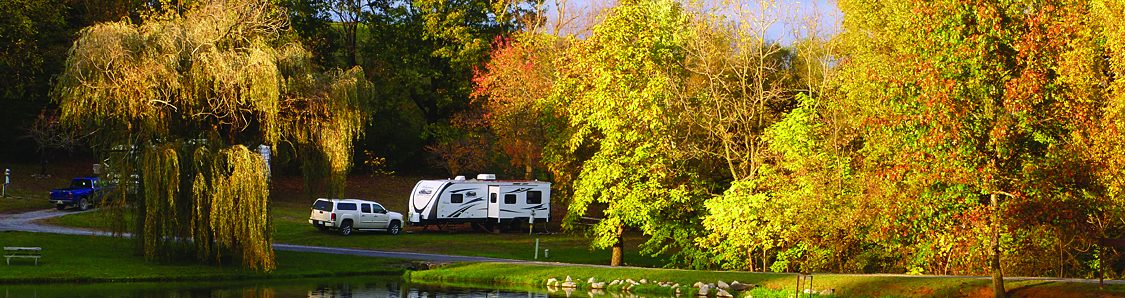
A developing tropical system in the Caribbean is moving north, among predictions that give it an 80% chance of becoming a tropical storm before it reaches the Gulf Coast—because, you know, Florida. Even though the tentatively named Idalia probably won’t hit before mid-week, by which time there’s some chance it will have strengthened into a hurricane, Governor Ron DeSantis already has declared a state of emergency for 33 of the state’s 67 counties—because, you know, DeSantis.
And right in the middle of the potential impact zone is Citrus County, where the county commissioners this past week gave a thumbs-up to building a coastal RV park and glampground on a site that averages two to three feet above sea level—because, you know.
Florida.
Remember when you first learned about the supposed suicidal behavior of lemmings chasing each other off a cliff, making you wonder how any animal could be so dumb? Uh-huh.
Sunshine RV-Fishcreek Glampground & Boat Ramp is the brainchild of Jennefer and Dimitri Magradze, who less than three years ago bought a 16-acre parcel at the end of a narrow, key-hopping two-lane road that snakes through the bayou about 60 miles north of Tampa. As I’ve previously reported, the site is bounded by the St. Martins Marsh Aquatic Preserve and the Crystal River National Wildlife Refuge, a rich off-shore area of marshes, mud flats, oyster bars, mangrove islands and seagrass beds, as well as the only wildlife refuge dedicated to the protection of the West Indian manatee—just the place, the Magradzes decided, to put in a campground for 32 RV sites, 16 glamping cabins and 20 “primitive” sites.
But because the parcel is zoned as a coastal and lakes residential district, which doesn’t allow for RV parks, the Magradzes had to get the approval of the county’s planning development commission—which it declined to give. Twice. Nonetheless, unfazed by the commission’s 5-2 and 6-1 denials or by the gathering storm of local opposition its plans were whipping up, the Magradzes persevered, culminating Aug. 22 in a unanimous vote by the county commissioners to reverse the planning commission. The 5-0 vote came after a five-and-a-half hour meeting attended by hundreds of local residents, which judging from census figures, may have accounted for virtually everyone living within a mile of the contested site.
To be fair, it must be acknowledged that the Magradzes have their supporters, a combination of those with a thin hope they’ll provide an economic boost to the area and those who resent any government attempt to control land use. But the local turnout—so great, according to the Citrus Chronicle, that it overflowed the the hearing room and forced many to watch the proceedings on closed circuit TV—attested to widespread concerns about septic tank contamination from flooding during the inevitable storms, as well as the potential for life-threatening bottlenecks on the narrow roads in an evacuation emergency. As quoted in the Chronicle, one of the planning commissioners said he’d had trouble navigating the access roads in an SUV, “let alone an RV,” adding, “The infrastructure is not there to support this project.”
No matter. The county commissioners overrode their own advisory board for largely inarticulate reasons, such as the commissioner who expressed her “confidence” that the Magradzes would address the various issues that had been raised, or the one who confessed that she still had “concerns” about the effect of flooding and septic tanks on the environment—but had decided to side with her colleagues anyway. But as made clear by county commissioner Jeff Kinnard, who made the winning motion, the whole process was simply a buck-passing exercise. The Magradze proposal still must be approved by several state agencies, including the Florida Department of Environmental Protection, Kinnard observed, before paternally counseling those in attendance to “take time to heal and get to know your neighbors again.”
The wider RV community seemingly greeted this reversal with glee, if a fawning report from Modern Campground can be believed. In an Aug. 25 post bearing the unmistakable imprint of chatbot assistance, the online news service claimed the Florida RV Park and Campground Association had “celebrated” the decision as a “landmark victory.” The association’s support “was instrumental” in securing approval for a glampground that “had faced significant opposition,” according to Modern Campground. “However,” it added, “the meticulous planning by owners Jen and Dimitri Magradze, emphasizing harmony with the natural environment and catering to outdoor enthusiasts, swayed the county commissioners.”
No mention, of course, of why the Magradzes had faced “significant opposition,” nor of the planning development commission’s double-barreled rejection. Nor was there any description of the couple’s “meticulous planning”—which, forgive my cynical heart, may have amounted to no more than lobbying the Florida RV Park and Campground Association—nor how that planning is going to cope with a storm surge that will handily roll right over the little bit of heaven they’re proposing to build.
The next week may demonstrate just what awaits, even before the first glamping cabin makes an appearance or an RV tries to flee the floods.
On a related note: It’s been hard to miss the drumbeat of reports about Florida’s growing insurance crisis, much of it driven by, yes, soaring hurricane coverage premiums. At least six insurers went insolvent in the state last year, despite average annual property insurance premiums that rose at the end of last year by triple the national average. Commercial rates are rising even more sharply and are expected to go up 45%-50% this year—and a doubling of premiums won’t be out of the question, according to a report from Yardi Matrix, a commercial real estate data and research firm.
Premium levels are determined by risk, and with each new risky development—such as the Fishcreek Glampground—the industry’s overall risk factor goes up. That suggests the Florida RV Park and Campground Association should hold off on celebrating developments in Citrus County, which in the long run will mean higher insurance costs for all of its members.
Most recent posts

 Renting Dirt