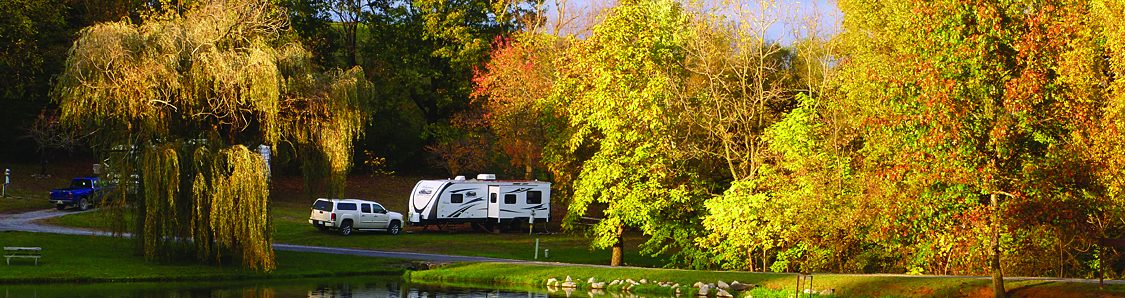
Deschutes dithering about RV homes

There’s a lot of dithering these days in Deschutes County, Oregon, about whether it’s a good idea to give a government stamp of approval to people living in RVs as permanent residences. No other county in Oregon has yet taken that step. And as county commissioner Phil Chang noted in today’s commission meeting, there’s a difference between “the bleeding edge” and “the leading edge” of innovation, with no telling what the consequences may be for those leading the charge.

Or as plaintively asked by commissioner Patti Adair, “For once, do we need to be first?”

Occasioning such angst has been a will-they-won’t-they struggle by the three-member board to decide whether to include RVs as permissible dwellings under an Oregon law that allows accessory dwelling units on single-family rural lots. Although two public hearings last fall elicited strongly negative comments about the whole idea, the Deschutes planning commission only narrowly shot it down, on a 4-3 vote—close enough for the county’s board of commissioners, after discussing the planning board’s decision at a Feb. 28 meeting, to decide it should keep talking. Because, as Adair also noted, “it could have gone either way.”

Today’s upshot? A vague decision—no date has been set yet—to hold another public hearing on the matter. Maybe before Memorial Day—or maybe in the fall, with a thinly expressed hope that some other county (Tillamook and Clackamas were prominently mentioned) will bite the bullet first, “allowing for an assessment of those programs and the lessons learned therein.” After you, my dear Gaston. No, no—after you, Alphonse.

To be fair, today’s meeting was called in part to get answers to questions that were raised at the Feb. 28 meeting, principally having to do with wastewater management. But those answers weren’t encouraging: RV wastewater characteristics are significantly different from a regular household’s, according to Todd Cleveland, onsite wastewater manager. It’s more concentrated, and the chemicals that RV owners add to reduce odors are not septic-system friendly, regardless of what the label may say. Among the most frequent complaints fielded by county enforcement officers about RV tenants are surface wastewater discharges, presumably because their septic systems are over-burdened. And soil quality in Deschutes County is such that adding an RV to a single-home site will require at least a one-acre lot for adequate percolation—and even that’s a guess because “we haven’t evaluated RVs for permanent use.”

No matter. Despite all the uncertainties, not to mention abundant other reasons why legitimizing RVs as suitable year-round housing is an enormously woeful idea, the pressure is on to provide some kind of alternatives in a state—like much of the U.S.—desperately in need of affordable homes. The Source, a county weekly newspaper, pressed the issue late last month in an editorial headlined, “With Affordable Housing, Why Are Deschutes County And The City Of Bend Ignoring The Low-Hanging Fruit?” as though the only difference between an RV and a bungalow is its placement on a tree of housing options.

In that respect, however, Deschutes County and the concessions it seems prepared to make are far from unique. Earlier this week, for example, RVtravel reported on “good news for RVers in the U.S. Navy!” Navy families may now “choose to live in an RV park for up to a year as they await availability of base housing when reporting to a new duty station.” The new policy, “an initiative of the U.S. Navy Morale, Welfare and Recreation Program,” is “aimed at reducing the stressors that come with a military lifestyle.”

The best way to reduce such stress, it should go without saying, would be to provide military families with something other than an aluminum or fiberglass band-aid. Living full-time in an RV—especially for more than a couple of adults—is its own significant stressor. But as the U.S. Navy has demonstrated, and as Deschutes County—and its Oregon peers—are sure to emulate, the normalization of RVs as an acceptable housing “solution” is well underway. Codify it, regulate it, inspect it—but not too closely—and hope for the best, because at least it gets people off the streets and out of those damn tents.

Meanwhile, it’s noteworthy that the RV industry, despite years of adamant public statements about how its products are specifically not designed for full-time occupancy, has remained completely mum on this issue. Not a word has emanated from the Washington, D.C. suburbs headquarters of the RV Industry Association to deplore this misuse of its recreational vehicles. Recreational, residential—what’s the diff? The important thing is to keep those production lines moving, especially after the post-pandemic slump, and leave it up to someone else to do the policing.

That may work in the short-term. What the RVIA has yet to understand is that the long-term consequences of such a laissez-faire attitude is a growing public disdain for RVs in general. It happened with “manufactured homes,” aka house trailers, which increasingly came under attack from their better-heeled neighbors. And it’s already happening with RV parks, which likewise are being seen as a blight on the community, to the long-term detriment of the entire industry.

Next post: A look at some of the pushback against proposed new RV parks.

RVs as ‘housing’ a recipe for slums

Squeezed by a housing crisis that is approaching Great Depression dimensions, state and local governments have started turning their backs on “decent, safe and sanitary” standards that long guided the home-building and mortgage-lending industries. The scale of the problem they face is daunting: half of all renters nationwide were “rent burdened” in 2022, spending more than 30% of their income for housing; a record 635,000 Americans were homeless last year. But faced with such overwhelming need, elected officials are grasping at a most primitive “solution”—RVs as permanent housing—and in doing so are laying the groundwork for even bigger problems a few years hence.

A case history of such declining standards is on display in Oregon, generally, and in Deschutes County specifically. Having already amended state law a few years ago to give its counties the option of allowing accessory dwelling units (AUDs), Oregon’s legislative assembly last summer took the additional step of allowing RVs to be used as rental dwellings in rural areas. Opponents argued that the state had yet to see whether allowing AUDs would make a significant difference in the housing supply, but supporters noted that Oregon needs more than half-a-million new housing units across all income levels within the next 20 years. All possibilities should be considered. Recreational vehicles, it was argued, could take up the slack, presumably because they’re cheaper and mobile, and therefore relatively quick and easy to set up.

The “ayes” had it, producing a law that is remarkably free of restraints on allowing “vehicles . . . designed for use as temporary living quarters” to be used as permanent housing. The law does require that such RVs not be “rendered structurally immobile,” presumably so they can be removed more readily when “dilapidated or abandoned”—one of the drawbacks of “a limited useful life” cited in a legislative analysis. But the law does not require “fire hardening requirements,” as was included in the law authorizing ADUs. And it explicitly declares that RVs used as housing are “not subject to the state building code.” Indeed, virtually the only state restrictions are on which properties can be used for this new housing option, with any additional regulations left up to each county.

While Oregon’s new RV law did not go into effect until Jan. 1 of this year, Deschutes County was all over it months ago. Located in the rural middle of the state and coping with a homeless population of approximately 1,300, the county had its planning staff draft new rules last October to put some flesh on the legislative bones. The result couldn’t get more basic. For example, Oregon defines “vehicles used as temporary living quarters” as having, “at minimum, cooking and sleeping facilities that may be permanently set up or connected to the vehicle, or may be stored within or upon the vehicle with the intent to use within or upon the vehicle”—a definition, alert readers will note, that makes no reference to toilet facilities. Planning staff therefore included, as “additional standards under consideration,” a requirement that “the RV must have an operable toilet and sink.”

That’s what you call a low bar. Meanwhile, the “additional standards under consideration” make no mention of the clear allowance for outdoor kitchens, don’t set a minimum square-foot-per-occupant standard, don’t address what kind of utility hookups will be required, don’t even call for fire extinguishers or smoke alarms—and certainly don’t set up an inspection protocol to ensure the standards are being met.

Planning commissioners met Jan. 11, and again Jan. 25, to review the staff’s proposals as well as three dozen or so written public comments, almost all opposed to the whole idea. Many commenters took issue with the basic rationale for the RV initiative, pointing out that increased housing density on rural land won’t help people who need jobs and social services that tend to be located in urban areas. Many also noted that new RV dwellers would place additional demands on infrastructure and municipal services, such as fire protection, police, and ambulance services, without any offsetting increase in tax revenues. And others expressed concerns about increased demand on ground water supplies, the greater fire hazard associated with growth in the urban-wildland interface, and the loss of a rural lifestyle caused by a potential doubling of the population.

But perhaps the most telling criticism, echoing a concern raised by the legislative analysis last summer, is that counties like Deschutes simply don’t have the resources to enforce whatever rules they adopt. RVs on private property are already becoming prevalent, many complained, in defiance of existing zoning restrictions and without any enforcement by an overburdened county government. “We have lots here that look like homeless encampments, with not enough code enforcement now,” wrote Mark and Jane Odegard, reflecting a common observation. “We are a residential community, not a campground.”

Craig Heaton echoed the sentiment, complaining of “several RVs, campers, fifth wheels and small sheds ” on nearby properties. “It is quite common to smell the sewage. Extension cords from the house to these makeshift quarters are present. Year after year I’ve filed complaints with Deschutes County” to no avail, he added.

Apparently taking these and other concerns to heart, the planning commission rejected its staff’s proposals—but only by the narrowest of margins, voting 4-3 against permitting use of RVs as supplemental housing. But it also left the door open for further consideration, via a work session with the county’s commissioners on Feb. 28 to determine whether to hold a public hearing on the matter. Should that happen, it will be interesting to see who in the RV industry will step up and point out all the truly horrific reasons why this is a bad idea—ha-ha-ha! Just kidding!

The problems of exorbitant housing prices and exploding homelessness are real and tragic, and cry out for effective intervention—but putting people into firetraps with scarcely more floor space than a prison cell is not it. All that will accomplish is a dispersed slum of rapidly deteriorating eyesores, transforming Deschutes County into an Oregon version of the worst of West Virginia, also a once truly magnificent landscape.

RVs as Swiss Army knives of housing

Part of a two-mile-long line of RVs parked along a frontage road for Highway 101 in Marin County, California, reflective of a growing affordability crisis in housing throughout the U.S.

Swiss Army knives have been promoted for decades as the epitome of versatile utility. Carrying one in your pocket, you can have an arsenal of handy tools at your disposal—not just a knife blade or two, but if you’re so inclined, various screwdrivers, a bottle opener, can opener, corkscrew, metal saw, metal file . . . on and on to absurd lengths, including a toothpick, tweezers and magnifying glass, depending on how much you want to spend. The scissors aren’t worth a damn, and the Leatherman multitool eventually demonstrated what a folding pair of pliers should look like, but you can still shell out more than a hundred bucks for 6.5 ounces of 33 “essential features.”

So it is with RVs, which at one time (and not so long ago, either), were little more than hard-sided tents on wheels. But as with Swiss Army knives, which “evolved” from basic tools to gussied-up toys, you can get anything from a minimalist model to one with as many extras as you care to underwrite, progressing from an ice chest and Coleman stove all the way up to house-size refrigerators, sinks and showers with running water and flush toilets, microwaves and induction cooktops, flat panel TVs, electric levelers, gas furnaces . . . on and on to absurd lengths, including heated floors and washers and dryers.

All that frippery gets sold in the name of both comfort and versatility, in the same way that Swiss Army knives are pitched as the ultimate survival tool to urban dwellers who almost never will be in a situation that puts them to the test. Thanks to the many, many “upgrades” that have gone into “improving” today’s RVs, you can “enjoy nature” without actually getting into it, much as you can enjoy the outdoors in a zoo or at an aquarium, staring at other life forms through glass or bars; just haul your metal, plastic and glass cocoon from one Eden to another, marveling at nature’s bounty from the comfort of your marvelously appointed environment.

Okay. To each his or her own, and if that’s how you choose to spend your money and time, the proper American response is to say “so be it.” Freedom! But the thing is, this isn’t just about individual choice. All those hundreds of thousands of decisions to buy an RV with bells and whistles are rapidly becoming a socially warping phenomenon. And unlike Swiss Army knives, which even in the tens of millions are an insignificant addition to the social landscape, RVs have a distortion effect more comparable to that of the automobile.

There is, first, the impact they have on the physical landscape itself, both directly—because of their increasing weight and size, as well as their consequential increased gas consumption—and indirectly, primarily through the ancillary development of campgrounds and other support services. Those two million or so RVs sold since the start of the pandemic have sparked an enormous land rush by investors looking to cash in on the next big thing, and they’re not content to build what once was considered an “average” size RV park, of 100 or so sites. As this blog has repeatedly observed, the norm now is 300, 350, 400 sites—or much, much more.

Earlier this month, for example, the Daytona Beach City Commission in Florida signed off on revised plans for an RV park it had initially approved only a few months ago. The original plan called for 480 sites, which is very big by any measure; the revision, however, boosts that to 1,200. Public opinion on the decision was split along familiar lines, with those in opposition fretting about increased traffic and the effect on local wildlife, including bears (yes, bears—in central Florida), gopher tortoises and sandhill cranes. But for those favoring the increase it all boils down to the anticipated economic boost from increased tourism, and that’s a trump card that all too often wins the day.

Or consider the Hobson’s choice confronting residents of the optimistically named New Hope, Tennessee, where the owners of a 110-acre farm have had their property on the market for two years. Land-rich and cash-poor, they’re all too ready to sell it to an RV park developer who—if all goes as proposed—eventually will create 400 or more RV sites in a town with fewer than 900 residents. Those who turned out Monday for a public meeting on the matter clearly were torn between their understanding of why the farm is up for sale and of just how thoroughly such a sale will disrupt their lives—although as one participant noted, an RV park has got to be better than a Chinese battery factory. Or a chicken plant.

A low bar, indeed.

But it’s not just their environmental impact that makes RVs so disruptive. Marketed as a complete home package, they increasingly get promoted as actual residences, resulting in blurred distinctions and legal challenges. In Baldwin County, Alabama, for instance, the owner of a mobile home park currently is arguing with local officials and the state attorney general about their refusal to permit RVs on his property because that would violate county subdivision regulations. As the aggrieved park owner points out, RVs already are a common feature in mobile home parks across the county, so why shouldn’t he allowed to add a few spots for the RVs of construction workers hired for a new aluminum and recycling plant?

Indeed, as this blog also has observed, the Alabama dispute about RVs vs. mobile homes is going on all around the country. The irony is that this changing perception, in which RVs have morphed from recreational vehicles to residential ones, is actually putting the squeeze on the RV parks themselves—or, more accurately, on the RVers who want to stay at campgrounds because they’re, you know, camping. It’s telling, in this regard, that the latest quarterly report from Sun Communities attributes its strong financial results, in part, to its “transient-to-annual RV conversions of 524 sites”—that is, to 524 RV sites that are now filled with RVers who aren’t going anywhere. That’s swell for campground owners who no longer have to fret about low occupancy rates, but not so great for RVers looking for a site for the night.

The growing acceptance of RVs as acceptable—if not exactly desirable—housing has filtered all the way down to the economic stratum in which the thought of an RV vacation is as fanciful as dreams of dining on crêpes suzette in Paris. The progression through which homeless people have gone from sleeping on steam grates or under newspapers to pitching tents to living in battered vans, travel trailers and Class Cs has proceeded with breathtaking speed, reintroducing us within a decade to a world of Hoovervilles and shanty towns once associated with the Great Depression.

Consider the picture at the top of this post, taken by a San Francisco Chronicle photographer in one of the country’s most affluent counties, where the median household income is $131,000. As one of the couples living in a trailer parked alongside the road told the newspaper’s reporter, there are times when having an RV with a bathroom and kitchen—even though without refrigeration or running water—can make them forget they’re homeless.

Most recent posts

Climate refugees add to camp crush

The growing prevalence of battered RVs and tents as housing of last resort, crowding city streets, public lands and commercial campgrounds, has been recognized for some time as the inevitable byproduct of soaring rents and gentrifying real estate. But it’s not just higher costs that are contributing to America’s housing immiseration. A growing horde of climate refugees—a phenomenon long associated with Third World countries—also is becoming an inescapable part of the landscape, driven by extreme weather events that are growing in both number and intensity.

Last week the American Red Cross, which has among the most comprehensive overviews of national crises, reported it had responded to more than 80 separate disasters over the previous 100 days—some, it averred, accelerated by the climate crisis. “In the 1980s, we had an average of three billion-dollar disasters each year, while over the past five years the country has seen a six-fold increase and now averages 18 of them annually,” said Brad Kieserman, vice president of disaster operations for the Red Cross. “We’re now running major disaster operations nearly continually throughout the year, as our climate changes and extreme weather increases.”

The Red Cross’s observations were buttressed by a survey from the U.S. Census Bureau that concludes an estimated 3.4 million people in the U.S. were forced to evacuate their homes last year by extreme weather—some never to return. The estimate was extrapolated from 68,504 responses to a survey conducted Jan. 4-16 and is still considered “experimental,” as the bureau first started tracking displaced people only in 2020 and is still refining its methodology. Still, the scale of the problem it reveals has surprised and even shocked some observers.

“These numbers are what one would expect to find in a developing country. It’s appalling to see them in the United States,” Michael Gerrard, director of the Sabin Center for Climate Change Law at Columbia University, told NBC News last week. “The United States is not in the least prepared for this. Our settlement patterns have not reflected the emerging risks of climate change to the habitability of some parts of the country.”

High on that list for 2022 are the Gulf Coast states, where hurricanes displaced almost a million people in Florida—7% of the population—and twice that percentage in Louisiana. More than 22,000 homes were destroyed or received major damage just from Hurricane Ian. Meanwhile, atmospheric rivers on the West Coast displaced more than 250,000 in California, while tornadoes and other severe weather displaced hundreds of thousands more—more than 380,000 just in Texas—across the South. Indeed, the National Weather Service already has confirmed 123 tornadoes in the U.S. in 2023.

Most public officials, however, have not risen to the occasion—or have made the homelessness problem even bigger. In battered Florida, for example, where rents last year increased an average 24% in the largest metro areas, state legislators repeatedly diverted money from a trust fund meant to support affordable housing programs for other purposes. Meanwhile, the Orange, Osceola and Seminole school districts reported a one-year increase of 45% in homeless students, and a tent city of dozens of people has sprung up next to downtown Orlando.

Final 2022 figures for the U.S. overall are still being tallied, but it’s sobering to realize that in 2021, more than 40% of all Americans lived in a county that was struck by extreme weather that year. That percentage will almost certainly grow, and as it does, the population of suddenly homeless people will grow in lock-step. Some—perhaps a majority, for now— will be able to rebuild, but those with inadequate or no insurance, or whose livelihoods have been demolished along with their homes, will not.

And as this dynamic evolves, many recreational campgrounds will more closely resemble refugee camps. It’s already happening, in slow motion. And it’s not something “over there,” in an earthquake-devastated Turkey or a flood-swamped Pakistan, but right here at home.

Most recent posts

FEMA didn’t get ARVC’s admonition

The split personality afflicting the RV industry, in which it can’t quite decide whether the wheeled homes it produces are recreational or residential in nature, has been on display again the past couple of weeks. The confusion is all but certain to result in calamity some day.

On the record, at least, the RV Industry Association (RVIA), the RV Dealers Association (RVDA) and the National Association of of RV Parks and Campgrounds(ARVC) all agree that the fifth-wheels and travel trailers that serve as vacation homes for millions of Americans are not meant for permanent, or even long-term, residency. Ditto for RV park models, which look every bit as sturdy and livable as their close cousins, the single-wide mobile homes beside which they are sometimes parked.

The distinction isn’t merely semantic. As I’ve written before, RVs are legally viewed as vehicles and are built to different codes than house trailers, which are defined as housing and therefore subject to more rigorous construction standards. The only notable distinction between the two is that as long as a house on wheels has less than 400 square feet under its roof—excluding lofts and outside porches—it only has to conform to the voluntary consensus standards set by the American National Standards Institute; more than 400 square feet and it has to meet more stringent Housing and Urban Development regulations.

The RV industry likes things this way because it means lower costs and less meddlesome interference from government regulators, which is understandable from a libertarian perspective—even if it does result in correspondingly shoddier and even life-threatening construction. As reported by the Indianapolis Star a month ago, in a devastating series that the RV industry has resolutely ignored, RV assembly workers don’t even need a license or certification to do electrical work, a level of lax oversight that HUD would never tolerate.

What brings this to mind is a general session at last week’s ARVC convention under the self-congratulatory title, “How National ARVC’s Advocacy Works for You.” Among the panelists was Wade Elliott, who has worked tirelessly over the years to raise electrical standards for campgrounds that in many cases were a do-it-yourselfer’s nightmare of undersized wiring, reversed grounds and shoddy work-arounds. Yet even Elliott demonstrated that he’s bought the myth that there’s a bright line between recreational vehicles and residential ones. Asked by an audience member why RVs shouldn’t be required to meet housing electrical standards, since there are so many people living in RVs, his answer was a short, “Well, they shouldn’t be living in them!”

Maybe not—there are a lot of “shouldn’ts,” including the necessary observation that people shouldn’t be living on sidewalks, either. But that’s the world we live in, and it’s naive at best and immeasurably cruel at worst to pretend otherwise.

Meanwhile, it’s clear that the federal government is no less fuzzy on the question of whether RVs are suitable as living quarters. Without any apparent recognition of the irony involved, RVIA issued a press release yesterday under the headline, “FEMA to Release Accessible Emergency Housing Proposal Request to RV Manufacturers.” As further detailed in the release, the Federal Emergency Management Agency wants to ensure access to a supply of RVs that are ADA compliant, with counter-top heights, thermostat placements and bathrooms suitable for wheelchair use.

The release stressed that “manufacturers will be able to use their existing processes, suppliers and materials,” and that FEMA will “do a significant run of units to create a stock of accessible travel trailers.” No mention, of course, of building the RVs to stricter HUD requirements—ANSI regs will suffice. And no acknowledgment of Elliott’s view that people “shouldn’t be living in them” because, of course, we all know they do. Even people in wheelchairs. In disaster areas.

What could possibly go wrong?

Most recent posts

Housing crisis buffets RVing public

The ongoing and deepening U.S. housing crisis continues to ripple through the RV and camping industry, as more people are squeezed out of conventional housing and traditional notions of what it means to have “conventional housing” get upended.

With housing prices at historic highs, asking rents are likewise soaring–23% higher in the second quarter compared to the same period in 2019, according to an Axios report last week, a gain of more than 8% a year. That’s a nationwide average, by the way, including small towns and rural areas; major metropolitan areas are a different story altogether. The average monthly rent in Manhattan, for example, just crossed the $5,000 level for the first time, but asking rents (the rent for new leases, not lease renewals) in lesser cities are growing by double-digit percentages. The year-on-year increase in December, for example, was 23% in Austin, 26% in Phoenix and 29% in West Palm Beach, Florida.

But rental properties aren’t getting more expensive simply because real estate overall is getting pricier: in many places the supply is shrinking as well, especially in the kinds of places that attract tourists and people with money and a hankering for a second home. Investment-property owners who once might have signed year-long leases now find it’s more lucrative to cater to the vacation crowd, converting to Airbnb listings. Owners of second homes, on the other hand, either leave the properties vacant for much of the year or also resort to short-term rentals, resulting in Airbnb listings outside of major metro areas soaring nearly 50% between the second quarters of 2019 and 2022. Either way, the inventory of conventional, affordable rental housing has been diminishing at a steady clip.

What’s a person to do? The default, for those who suddenly can’t afford to rent a house or an apartment, is to move into an RV, a van or even a tent. Some end up in campgrounds, some on public lands, some on city streets. That migration creates a host of social problems, from health and safety issues having to do with inadequate sanitation and increased fire hazards, to societal instability and environmental degradation. But it also amounts to an invasion of a public sphere that most people still regard as essentially recreational rather than residential. Increasingly, RVers report they can’t find a camping site, or the sites that they can find have been trashed or are in close proximity to “campers” who make them uncomfortable.

Some communities are attempting to deal with the problem at its root by limiting short-term rentals. Stinson Beach, a California ocean-side community just north of San Francisco, recently banned new Airbnbs, following the example of San Diego–which has approved a cap that is expected to cut vacation rentals in half–and San Bernardino County, which has temporarily stopped issuing permits for new Airbnbs and other vacation rentals. In Colorado, meanwhile, the Steamboat Springs city council has not only banned new short-term rentals but is seeking to impose a 9% tax on existing rentals with which to fund affordable housing.

Such efforts, however, inevitably generate opposition from property owners and civil libertarians, like the lawsuit filed against Lincoln County, Oregon, after voters last fall readily approved a ban on new short-term rentals. Earlier this month the Oregon Land Use Board of Appeals overturned the measure, ruling the decision goes against state laws, but ban supporters have vowed to continue the fight to “reclaim” their neighborhoods. Similar confrontations are bubbling up elsewhere.

As RVs increasingly become homes of last resort, legislative attempts to recognize and regulate this expanding use frequently run into opposition from trade groups eager to maintain the legal distinction between vehicles and homes. The RV Industry Association, for example, reported last week on its success earlier this year in modifying proposed legislation in New Hampshire that sought to define a “tiny house.” As initially written, the measure would have required a “tiny house on wheels” to “have a seal from a third-party inspection company authorized to provide such certification for tiny homes or recreational vehicles,” which RVIA contended would have resulted in RV standards being “confused with building codes meant for structures used as housing intended for year-round occupancy.”

Thanks to the trade group’s intervention, the reference to RVs was removed–although that did nothing to change the fact that RVs and park models are being used for year-round occupancy. The bill itself, meanwhile, died in committee.

Similarly, a bill in Colorado that RVIA dogged earlier this year would have established a definition of “RV residence,” a mash-up that made the trade group bristle. In addition to applying to any type of RV or park model used as “permanent or semi-permanent living quarters,” the legislation would have created regulations for properly registering an “RV residence” and hooking up an “RV residence” to utilities. The bill overall was meant to regulate tiny homes and was signed into law in May–but only after the “RV residence” references were all stripped out.

While it is indeed incorrect to refer to tiny homes and RVs in the same breath, as the two are built to entirely different standards and codes, the practical effect of actions like those just mentioned is to leave full-time RV residency in a legal and regulatory limbo. While RVIA and others insist that RVs are not intended for year-round occupancy, the reality is that’s how they’re being used, and increasingly so, for the reasons outlined above. Moreover, that’s also how they’re increasingly viewed by the public–which is why they were so readily lumped in with tiny homes by two widely separate state legislatures.

By maintaining the fiction that RVs are just hard-sided tents on wheels, we’re simply tolerating the development of a new generation of slum dwellings.

Most recent posts

Housing squeeze makes RVs a default

The development struggle that’s been going on in Maggie Valley, North Carolina, for much of the past year is symptomatic of a growing problem around the country, as developers rush in to capitalize on the renewed interest in RVs and RV campgrounds. As with any boom investment, the financial shock waves thrown off by big money frequently buffet little people who have no skin in the game and are simply trying to get by–and when it’s their housing that’s at stake, the end result is immiseration.

In Maggie Valley, the conflict began when a Myrtle Beach-based developer unveiled a $200 million (!) plan to revive a defunct theme park, which many locals remember fondly from the latter half of the last century. But bringing Ghost Town in the Sky back to life requires a lot more juice than it once did, the developer explained; it requires a whole lot of ancillary development, from new restaurants to a hotel to a health clinic. It also will require finding at least 200 new workers in an area that doesn’t currently have them, and new housing for all those workers, because the area doesn’t have enough of that, either. That’s why reviving the theme park also means building additional RV campgrounds, he told the town, because that’s the cheapest and most flexible housing solution–even though the town has precious little flat land and at least a dozen existing campgrounds already serving the tourist trade.

The campground “solution” raises several issues, not least among them the suitability of RVs for long-term housing. But here’s an even more fundamental question: why isn’t there enough housing in Maggie Valley for the people who work there? And the answer, as just about all resort towns already know, is that real estate prices have gone through the roof. In Maggie Valley, located in Haywood County, home prices have jumped 33.7% in just the past year and 73.3% over the past five years, to an average of $338,316. Meanwhile, the average monthly income in Haywood County was just $2,454 in 2020, putting affordable housing out of reach of the people working in the tourist industry that is supposed to inject the town with economic vitality.

Ironically, while some of that upward pressure on prices is due to inadequate new construction, a significant part of it is the result of the pandemic-fueled return to the outdoors that developers are now trying to exploit. As local observers have noted, new visitors arrive, they fall in love with the mountain scenery and they decide to stay–sort of–by buying a vacation home. Sometimes two. That’s nice for them, providing a refuge from whatever claustrophobic cities they call home, but while their surplus homes sit empty most of the time, local workers more rooted to the area can’t find an affordable place to live.

This is not a problem peculiar to Maggie Valley, of course, although it may be more pronounced in mountain communities because of their additional topographic constraints on new home construction. Local news reported last summer that many workers in Jackson Hole, Wyoming, were living out of their cars in Bridger-Teton National Forest because there was no housing to be had. In the Idaho panhandle this past week, the Shoshone Board of County Commissioners heard numerous objections to a proposed RV park, including the fear that it would essentially become a magnet for “trailer trash.” As one local resident pointed out, a plummeting availability of rental properties is forcing area workers to turn to short-term rentals and RVs for their housing needs, with RV campgrounds at risk of becoming the next generation of trailer courts.

Indeed, short-term rentals are the other main driver of housing scarcity: real estate investors have concluded that the higher rates they can charge for short stays more than compensate for their higher risk compared to long-term rentals, and so have been snapping up houses and apartments that would otherwise be rented by working people. The short-term rental sector is so lucrative that newcomers like reAlpha–trolling for new investors with as little as $1,000 to buy in–dangle an irresistible set of numbers: Zillow’s estimate that long-term rentals are currently pulling in an average of $1,495 a month, vs. Airbnb estimates of $3,256 a month for short-term stays. “There’s a reason billionaires invest 20-40% of their wealth in real estate,” reAlpha croons.

Given those pressures, it’s little wonder that many RV campgrounds increasingly are headed in the direction of being dumping grounds for people with nowhere else to go. RVs are hardly designed for year-round living, and unlike regular housing they depreciate over time, so their owners never build up the equity that would allow them to escape their trap. But they are a step above living out of a car in a national forest–and they do enable developers with deep pockets and large ambitions to keep on getting bigger.