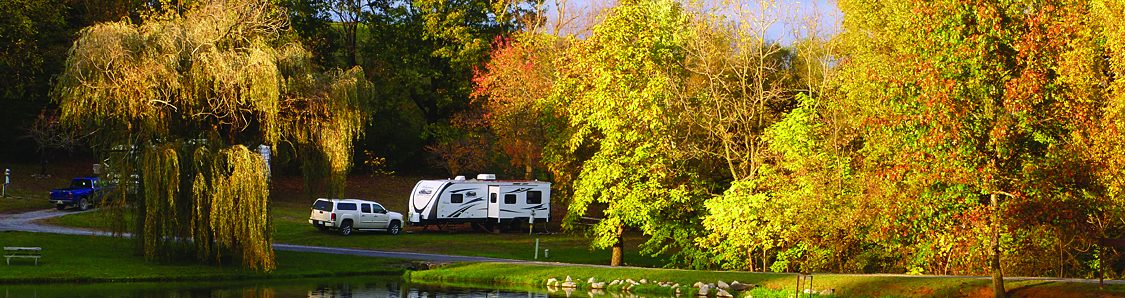
RVtravel.com had a curious little story this past week headlined “Idaho: A little RV park draws plenty of opposition.” I call it “curious” because the article glided right over the central issue to fixate on the “tempest in a teapot” nature of a two-year battle waged by a developer to build a tiny 20-site RV park on 4.17 very rural acres. As the article points out, this is an extremely modest proposal that readily meets or exceeds all relevant county standards—so how come there’s a groundswell of local opposition, including a court challenge, in a state better known for its libertarian, live-and-let live inclination?
Maybe it has something to do with the ongoing trend of cheap housing developments masquerading as RV parks.
Not that there’s any mystery about what’s going on. When Idaho Land LLC filed its application with Bonner County for a conditional use permit, it was completely aboveboard about its intentions. “Our mission is to provide affordable housing for members of our community,” the application states. “With Idaho being the fastest growing state by population, and Bonner County growth projected to be 2.25% annually, the park will provide transitional housing for those migrating to north Idaho and provide a low income housing option for current residents who are combating rising housing prices in the area.”
As the application also notes, “The park is in alignment with the counties [sic] goal of providing affordable housing options in an area with adequate public and private services provided.” And, again: “The park will provide alternate low income housing options for residents in accordance with the goal of providing adequate shelter regardless of age, income or physical ability.”
There are at least a couple of problems with these frank assertions, starting with the obvious question of why anyone would call this an “RV park.” This is as bare-bones a “park” as one can imagine, the site plan showing little more than an oval gravel road with 20 full hookup back-in sites, a “laundry facility” and a dumpster. No bathhouse, no registration office, no campstore or playground or any other kind of structure or amenity, for that matter, and apparently no staff . This is basically a trailer park for RVs.
But Bonner County’s zoning regulations, while limiting occupancy of RVs on residentially zoned land to 120 days, specifically exclude RV parks from that limitation. Indeed, the county’s extensive rules about RV parks are inexplicably silent on that one question, even as the rules acknowledge that RVs are “primarily designed as temporary living quarters.” Meanwhile, the county’s zoning regs allow only one RV per residential lot unless a conditional use permit is granted. Opposition to the Idaho Land proposal is based in part on the contention that because it’s looking to provide a residential facility rather than a recreational one, the one-RV-per-lot limitation should be applied.
Not so, argue Idaho Land and its representative, Stephen Doty. “I’m not applying for dwelling units,” Doty was quoted as saying by Rvtravel, ignoring the application’s clear assertions about housing. “I’m applying for an RV park permit to operate an RV park.”
The idea that simply calling something an RV park makes it so, regardless of how the land will actually be used, is troubling enough. But the wider issue here—and one that should concern an industry that increasingly claims to be part of the “hospitality industry”—is the growing acceptance of RVs as residential options (as I’ve written before, here, here and here, among many, many other posts). As I’ve stressed before, and as industry manufacturers likewise feebly maintain, RVs are not built to residential standards. Think what you will about the cardboard walls and minimal insulation of house trailers, they at least have to conform to HUD standards that RV manufacturers can blithely ignore.
But trailer parks have acquired a disreputable reputation, which means no one is in a rush to build more of them, while RV parks still retain a feel-good image. Moreover, the campground industry clearly wants some of that action, too. Thanks to a real estate crunch that has made affordable housing increasingly scarce, demand for monthly RV sites has gone through the roof, convincing a growing number of RV parks to convert transient sites into long-term ones. And why not? Long-term sites mean predictable and steady income; with less turnover, they also allow for lower staffing levels and fewer amenities than are expected by a recreational customer base. The bare-bones Bonner County proposal is only the logical outcome of this trend taken to an extreme.
Yet as I wrote quite recently, this is a trend that will come back to bite the industry in the butt. The kicker is that the industry knows this—it just seems incapable of doing anything about the slow-moving train wreck it has created for itself. As Dyana Kelley, executive director of the California Outdoor Hospitality Association, recently acknowledged, “If we look like and act like low-income housing, then that is how we will be perceived and regulated.” Bonner County, in approving the Idaho Land application last week, simply pounded one more nail into that coffin.
 Renting Dirt