RV red flags keep popping up all over

Representatives of RV manufacturers and campground owners keep radiating good cheer about the upcoming season, paying extravagant notice to every uptick in sales and reservations. And indeed there is cause for cautious optimism, with new RV shipments having arrested last year’s free-fall and notching slight gains, while KOA has reported that 64% of campers already have made reservations “for some sort of trip” in 2024. So maybe the first day of spring truly is a sunny one.

Yet it’s also clear that industry participants remain leery of what lies just over the horizon, and there’s good reason for that, too. Short-seller interest in Thor Industries and Winnebago Industries, the two 800-pound gorillas in the RV manufacturing segment, is high, not least because Thor earlier this month slashed its 2024 outlook based on soft demand and high interest rates. Winnebago, meanwhile, will be announcing its 2nd quarter results tomorrow, following an 11% drop in share price this month.

Late last week, meanwhile, Marcus Lemonis, chief executive officer of Camping World Holdings, unloaded nearly a fifth of his company’s stock holdings, selling 100,000 shares at an average price of $25.63. The $2.56 million payday comes several weeks after Camping World announced a 10.6% decline in revenues for 2023, with new vehicles sales for the year down 16.6%. Investor interest in this company also is bearish, with 17.53% of the float sold short.

As the Camping World example illustrates, the industry’s ongoing problem is a post-pandemic hangover that just won’t quit. The explosion in RV sales that started in 2020, while a short-term windfall for manufacturers and dealers, has proven to be too much of a good thing: too many units were cranked out in too short a time, resulting in significant production quality issues, while unceasing demand drove prices way too high. When the wind dropped out of the industry’s sails, dealers were left with too much outdated inventory that is still clogging their lots even as newer—and lower-priced—models are being delivered.

Lemonis tried to put a bright face on his company’s year-end report by noting that used vehicle sales were up even as new vehicle sales dropped, but as overall revenue figures suggest, that wasn’t nearly enough: while used vehicle revenue increased $102 million, new vehicle revenue dropped $651.8 million. And the average selling price of both new and used RVs declined—4.3% and 4.8%, respectively—further underscoring how greatly inflated the industry’s entire pricing structure had become. Indeed, the monthly Black Book reports on wholesale auctions have recorded six consecutive months of price declines for towables, while motorhome value trends have trended downwards since October of 2021, albeit in seesaw fashion.

Meanwhile, general economic news provides little to no reason to think demand will pick up significantly. With interest rates still high because of ongoing inflation anxieties, Americans are either tapped out or turning to deficit spending to sustain their lifestyles. Credit card debt is up and is taking longer to get paid down, with unpaid balances surpassing 2019 for the first time and delinquency rates continuing a steady rise since 2021. With record numbers of Americans unable to afford their rent, and many costs related to car ownership outpacing the consumer price index—AAA calculates that the the total annual cost of owning a new car was $12,182 last year, up from $10,728 in 2022—more people are using their 401(k) accounts as piggy banks. As reported by The Wall Street Journal, 3.6% of Vanguard’s 401(k) plan holders took early withdrawals last year for financial emergencies, nearly double the pre-pandemic average of about 2%.

All of which explains why the nearly 200 respondents to a recent Wells Fargo/RV Business survey of RV dealers had, at best, a tepid outlook for the coming year. More than a third (39%) expect a flat-to-down year, while an almost equal percentage (38%) expect growth of 0- 10%. Asked to describe the general state of the RV market, only 14% agreed “it’s solid, despite increasing interest rates, soft demand and other headwinds.” At the other extreme, 19% said it’s the “worst it’s been since the 2008-09 recession, ” while 39% admitted to being “nervous about inflation, potential recession and other challenges.”

Some of the dealers’ comments, meanwhile, echoed what many RV campers have been saying for several years. When it comes to repairs, for example, “parts and service has only gotten worse and the factories do not care at all,” while “manufacturers underpaying for warranty work is a major problem.” Or as another respondent observed, “It appears most industry executives, both suppliers and builders, are under the impression their quality is good. In most cases this is laughable.”

And on a more poignant note that should touch a nerve in all corners of the RV and campground ecosystem, there’s this: “I think the industry has lost touch [with] what camping was all about. Where has affordable family fun gone?”
Whistling past the RV sales graveyard

Heading into the Memorial Day weekend, camping industry cheerleaders were cranking out comparisons and forecasts to support their contention that the industry’s best days still lie ahead. But coming on the heels of some truly astonishing declines in factory shipments of new RVs, the chorus had a distinctly plaintive tone.

RV shipments for the first four months of the year were notably grim, down 52.1% compared to the same period last year—and down even more sharply for towables (which include travel trailers, fifth-wheels, pop-ups and truck campers), down 55.8%. Motorhomes (types A, B and C), meanwhile, were down a mere 14.9%, but the motorhome segment is less than one-fifth that of towables. Forecasts for the rest of the year have been revised steadily downward each month, with expectations now that 2023 will be the worst year for RV production in more than a decade.

Industry leaders have attempted to brush away this news with the assertion that 2023 was bound to show a decline after the pandemic-driven bumper-crop years of 2021 and 2022, and there’s certainly some truth to that. It’s the magnitude of the plunge that accounts for the barely concealed jitters, however—how many businesses can withstand half of their business evaporating in a year?—with no reasonable way to discern whether we’re in the throes of a minor correction or whether this is a deeper secular trend. But industry attempts at reassuring investors and customers have produced some near-comical contortions.

For example, Winnebago Industries, one of the biggest RV manufacturers, issued a cheery consumer survey this week that was long on insinuation but short on details to make a tenuous case that RV interest remains healthy. “Winnebago Survey Shows Growing Outdoor Activity,” its press release proclaimed, fudging the distinction between RVing and “outdoor activities,” such as hiking, cycling and boating. By the time the release got around to its ostensible subject, in a section subtitled “The Summer of RV Travel,” it was to present such carefully worded observations as “almost two-thirds of respondents have considered [emphasis added] using an RV for a vacation rather than traveling by plane,” and “over two-thirds of respondents have considered [emphasis added] using an RV for travel instead of a flight, hotel and rental car.”

Well, that’s reassuring—but what did those respondents actually do? Your guess is as good as any, but it’s clear that the airlines are not feeling any heat from RVs or other modes of transportation. As just reported by the Transportation Security Administration, its agents nationally screened 9.8 million passengers over the Memorial Day weekend, or 300,000 more than in the pre-pandemic year of 2019.

The idea that RVing is a cheap alternative to flying or driving on vacation nevertheless has captivated the industry, resulting in some highly questionable cost comparisons. The RV Industry Association, for example, reported May 18 that “an outside, independent firm has found that RV vacations cost much less than other types of vacation travel, even when factoring in fuel prices and the cost of RV ownership.” Aside from the problematic issues that come with any apples-to-oranges comparisons (what kind of RV compared to what kind of air fare or car rental plus what types of hotel accommodations? etc.), the lack of a publicly defined “cost of RV ownership” makes the analysis meaningless. For instance, is that the cost of an RV purchased outright, or one with a 10- or 15-year loan? With how much down and at what interest rate?

(One detailed example, from the several that were included in the RVIA-backed study: the costs for a family of four traveling from Dallas, TX to the Grand Canyon for a 14-day vacation would be $8,801 if the family took a plane, rented a car and stayed in hotels, according to the study, contrasted with an equivalent Class C motorhome vacation expense of just $5,627. But Go RV Rentals apparently occupies a different reality. Its unrelated press release this month (touting the economics of RV rentals) calculated that using a Class C motorhome for 20 days costs $911 per day “when you factor in the total cost of ownership”—or $12,754 for 14 days, more than double RVIA’s rosier assessment. As with the RVIA study, no explanation here of what comprises the costs of RV ownership.

(Meanwhile, want to rent rather than own? Go RV Rentals says that same Class C goes for an average base rate of $217 per day, plus as much as an additional 50% for insurance, service charges, optional equipment and sales tax. That’s $4,557 for the Dallas-Grand Canyon trip—before gas, any excess mileage charges and campground fees. Throw those in and you’ll certainly exceed the RVIA’s estimated $5,627.)

The argument that RVing is an economical way to vacation works only if such a vehicle gets deposited in your driveway for free and it never suffers any mechanical issues. And with the pandemic essentially a non-issue for most Americans, the ability to travel and cocoon in a personal bubble is no longer the enticement it was the past three years. Add to that the shrinking number of American workers who remain able to work remotely, and all of a sudden the main reason to go RVing reverts to what it was before all the craziness started: to go camping!

But is that enough?

Interestingly enough, that very question—with a perhaps predictable answer, after an initial tease— was posed by Toby O’Rourke, president and CEO of KOA, at the 2023 RV Industry Power Breakfast in Elkhart on May 11. “For the past couple of years, when I’ve been asked about all these new people camping, I have always said there is going to be a natural drop-off,” she told an industry audience of more than a thousand. “Camping is not going to be for everybody.” Indeed, she noted, 32% of people who went on an RV trip for the first time said the experience was good or great—raising the question, what was less than okay for the other 68%?

But while O’Rourke used to think that camping isn’t for everyone, now “I really don’t accept that anymore and I don’t think you should, either.” Although she didn’t explain what led her to change her mind, O’Rourke said she now believes those unimpressed campers are simply in need of special attention. They’re a marketing and education challenge, blocked from a full-throated embrace of the joys of camping by a number of “pain points” that the industry must address if it wants to keep growing. “Here’s the problem as I see it: the reality is that camping is an easy choice, but it’s not always easy,” O’Rourke told her audience. “If we don’t smooth over these pain points, we are at risk of losing those 70% of people that are lukewarm about continuing to camp.”

Or maybe O’Rourke had it right the first time: camping isn’t for everyone, not because of “pain points” but because nothing is for everyone. That’s not what the industry wants to hear, of course. Much better to believe that it’s just a matter of better messaging, of becoming more customer obsessed. Desperate times call for desperation.

Most recent posts

RVers adopt a wait-and-see attitude

It is a given that industry representatives will insist the sun is shining even as thunderheads pile up on the horizon—and really, who can blame them? But for everyone else, being lulled by rosy forecasts that ignore storm clouds can result in a good soaking. Or worse.

Having declared a month ago that the 2023 camping season was off to a strong start, which is demonstrably true, KOA went out on a limb by assuring the public that campers “are also starting to make solid plans for the rest of the year.” But “solid” requires some context. As previously reported, a year-over-year comparison of KOA’s surveys actually showed a remarkable softening: fewer than half as many campers had made reservations by February for this season as had in 2022 for that year.

The hesitation continues. KOA today released its March monthly report, flagged with the optimistic headline “Rise in camping continues” and citing strong camping turnout at the start of the year. But again it went a step too far, with senior vice president Whitney Scott announcing in a press release that “we’re seeing more bookings made earlier”—yet KOA’s own figures show that 27% of their survey respondents have booked some or all of their 2023 camping trip thus far this year, compared to 50% at this time last year.

There is, undeniably, strong interest in the idea of camping. KOA’s surveys show that, and certainly this year’s near-record turnout at the big RV shows underscores the point. People are looking and day-dreaming, pressing their noses against the display windows of their imaginations as they conjure visions of sweeping vistas and crackling wood fires—they’re just not committing. They’re keeping their powder dry, whether it’s by deferring RV purchases—dealers have been complaining that RV show interest is not translating into sales—or by merely bookmarking campgrounds and RV parks on their computers for a later decision.

The downturn in RV sales, despite industry efforts to characterize it as a return to pre-pandemic norms, is notably larger than expected. Market-leading Thor Industries—whose flagship labels include Jayco and Airstream—earlier this month posted steeper than predicted declines in sales and profits for its second quarter, contending that the sharp slowdown “is proof that our consumer is being impacted by elevated prices, higher interest rates and inflation.” Meanwhile, Winnebago Industries today reported second-quarter results that actually cheered Wall Street because the hole it’s in is not as deep as they’d expected: sales declined from $1.2 billion a year ago to just $866.7 million, or almost $60 million more than the consensus forecast. But helping plug the hole was Winnebago’s 16.1% increase in boat sales, to $112.9 million—apparently a segment that is not taking on water.

A similar pull-back was reported last month by Camping World Holdings, which posted a double-digit decline in same-store new vehicle sales for its fourth quarter—and which cut nearly 1,000 jobs. That mirrors trends in Elkhart, Indiana, where the great majority of U.S. RVs are manufactured and where the unemployment rate in January jumped to just a hair under 5%, more than doubling over the past year.

All this is more suggestive than definitive, as KOA and other industry leaders will be quick to aver. Americans have bought a lot of RVs in the past couple of years, and they’re going to want to use them. An RVing trip is still one of the cheapest ways for a family to go on vacation. Working away from an office is still a thing, and especially among a younger generation of technologically savvy nomads who have been the single biggest demographic of new RV buyers.

All true. But so are the statistics that show millennials are piling on debt to unsustainable levels, while Americans overall increased their credit card debt in 2022 by a record $180.3 billion—and today’s Fed decision, pushing interest rates to a range of 4.75% to 5%, means additional billions in costs in the months ahead. Moreover, millennials and others with college debt can expect an end to the government moratorium on their payments in a few months, further undercutting their ability to afford even relatively cheap vacations—and those, too, are becoming more illusory. RV parks have done themselves no favors by relentlessly increasing their prices the past couple of years.

Recent events have demonstrated just how quickly an apparently stable financial system can get shaken up. Alert RVers are paying attention to the gathering storm clouds, and park owners would be smart to do likewise, regardless of how many rosy forecasts they hear .

Most recent posts

For some RVs, the sky’s the limit

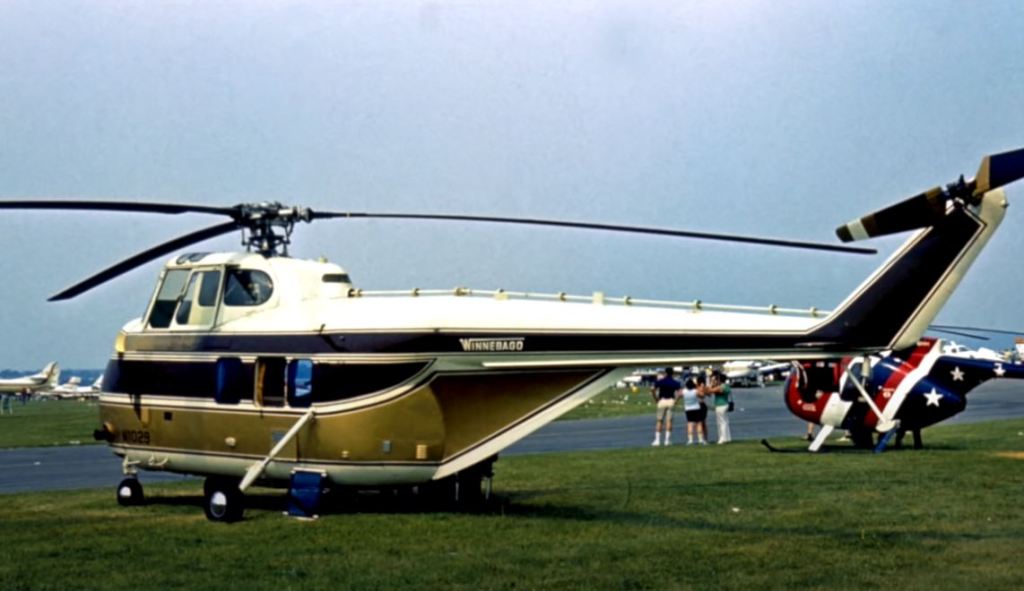
Yes, there really is a Winnebago logo on that helicopter.

Given that many, many RV owners still think an electricity-powered RV is the stuff of science fiction, it’s perhaps surprising that a decidedly more outlandish concept was dropped into a panel on the subject last week without any comment.

The speaker was Ashis Bhattacharya, Winnebago Industries’ senior vice president for business development, strategy and advanced technology, so no slouch about technological development in the RVing world—even if he was off by a couple of decades. Speaking at an RV Industry Association webinar on the development of EV-RVs, Bhattacharya asserted Winnebago’s innovation chops by mentioning that the company had introduced a helicopter RV perhaps 25 years ago.

The comment apparently flew over everyone’s head. But if a first-tier manufacturer could add wings (okay, rotors) to the RVing concept, surely switching from a gas-driven technology to an electrified one can’t be too much of a stretch?

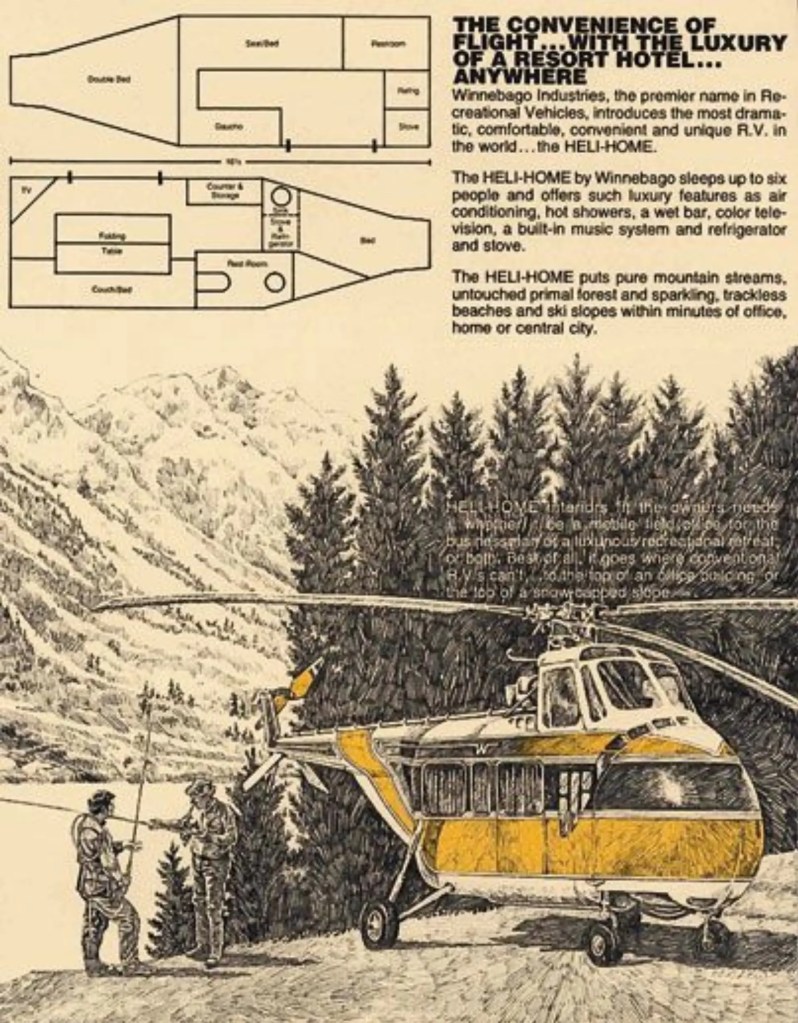
Not that Winnebago actually built its “Heli-Campers”—later changed to “Heli-Homes”— from the ground up, any more than it builds RVs from scratch today. But it did partner with Orlando Helicopter Airways, which in the early to mid 1970s was buying surplus military Sikorsky S-55s and S-58s for various civilian purposes. Half-a-dozen or so were furnished by Winnebago with a full galley with stove and refrigerator, twin water heaters, air conditioning and a furnace, a bathroom with holding tanks and shower, and sleeping arrangements (in the larger of two models) for six. Also included were a color TV and an eight-track tape deck (because, remember, the mid-’70s), a mini-bar, full carpeting and sound-proofing, a generator, an awning and, for a few extra dollars, pontoons for landing on water.

Heli-Camper performance numbers were more than competitive with today’s rolling homes: with a dry weight of 9,200 pounds, the flying Winnebagos could carry up to 3,000 pounds, had a cruising speed of 110 mph and a range of more than 300 miles. Plus, of course, the whirlybirds could access the most remote and trackless wilderness, outdoing even the gnarliest four-wheel drive RVs in search of boondocking heaven.

Only two stumbling blocks prevented the Heli-Camper from becoming a ubiquitous overhead annoyance in the backcountry. One was the price tag, which ranged from $185,000 for the base model up to $300,000—or between $1 million and $1.65 million in 2022 dollars. Even in a world of luxury Class As starting at more than half-a-million, that’s a lot of dollars.

Then there’s the little matter of knowing how to, you know—actually fly a helicopter. Winnebago tried to finesse that issue by creating a rental option for campers who wanted to hire a pilot, but even that was a pricey alternative, at $10,000 a week plus the pilot’s fees and cost of fuel. And then, of course, there was the whole sticky issue of what to do with that pilot once you reached your week-long retreat far from civilization. Perhaps it’s not surprising that neither sales nor rentals really took off, so to speak.

Still, if Winnebago was willing to take a shot at flying RVs, perhaps it’s only to be expected that today it would be at the forefront of the EV-RV ramp-up. At least with EVs the customer base is considerably larger, the cost per unit is a lot more within the public’s means, and there’s every reason to think that the technology will see constant improvement even as costs get driven down.

And then there’s this: those quiet and exhaust-less RVs will be a whole lot easier on the landscape than fleets of transport helicopters would have been, descending on whatever paradise you’d found. There’s good innovation, and then there’s the other kind.

Most recent posts

More electrifying news for RVers

A pair of webinars this past week, one hosted by the RV Industry Association and one by the National Association of RV Parks and Campgrounds, underscored how seriously the campground world views the oncoming onslaught of electric vehicles. While campground and RV owners remain mostly skeptical, questioning the costs, range, recharging availability and environmental impact of a lithium-based technology, industry leaders are unwavering in their belief that the EV-RV revolution is already here and that the problems others see are either overblown or will be resolved in timely fashion.

“We are really at an inflection point which is amazing,” Ashis Bhattacharya, senior vice president for development and advanced technology at Winnebago Industries, told his RVIA audience. A “wave of electric adoption” is already washing over rental car agencies, delivery services such as Prime, UPS and FedEx, as well as school buses and other municipal vehicle fleets, all of which is normalizing the technology. The paradigmatic shift already underway, Bhattacharya added, is as significant as any ever experienced in the transportation sector.

Meanwhile, said Jay Landers, RVIA’s vice president of government affairs, state initiatives to outlaw internal combustion engines are giving the entire EV sector a kick in the pants. Five states, including California, already have voted to ban sales of new internal combustion vehicles by 2035, and others are looking to possibly follow suit. The state of Washington, which had the country’s sixth highest rate of RV shipments this year, is even more aggressive, adopting a 2030 cutoff deadline. Furthermore, expansion of the EV charging network nationwide is being super-charged by $5 billion in federal funding approved earlier this year.

None of which, all speakers agreed, is to minimize the problems confronting EV in general, and EV-RVs in particular. “The (EV) technology is still more expensive than what it’s replacing,” conceded MacKay Featherstone, Thor Industries’ senior vice president of global innovation. Moreover, he added, “the charging experience is utterly critical” and still inadequate for RVers in particular, both because most RVs need pull-through charging stations to be practical and because they have larger power needs than EV cars.

To their credit, RV manufacturers, frequently criticized for shoveling out hundreds of thousands of RVs without giving a thought to where their buyers might use them, are at least trying to get out in front of this development. And there is little reason to doubt that a society-wide change is coming, and coming hard. EV-RV costs inevitably will come down as sales take off, as they do with any emerging technology. Alternatives to lithium batteries, using less exotic minerals, are being developed, and advances in recycling technologies will further ease environmental concerns. Similarly, ongoing improvements in battery density will continue to expand vehicle range, relieving one of the biggest consumer anxieties about EVs.

The weak link, however, appears to be the RV park and campground end of the product chain. The RVIA webinar inadvertently made that point when its campground representative on the panel—Toby O’Rourke, president and CEO of KOA—was so unintelligible that she had to be dropped from the screen, apparently because she was trying to link in from an airport. (And why O’Rourke, again? Is there no other campground industry representative who can speak to the industry’s issues? Maybe someone from the Yogi franchise, or ARVC, or one of the other large state RV park associations, like Texas or California?)

Subbing in for O’Rourke was Brandi Simpson, her chief of staff, whose faltering contribution was to assert that campground owners are dealing with “a ton of misinformation” about EVs and need a lot of education and guidance. Which, presumably, KOA is scrambling to provide. . .

. . . as is ARVC, which lustily beat the drum on behalf of EV-RVs at its national conference in early November, and again at an hour-long webinar a couple of days after RVIA’s face-to-face. Pitched as “a recap of the best” of the conference for those who might have been unable to attend, the session inexplicably ignored the most contentious convention issue—a proposal to adopt industry-wide “standards”—while devoting the majority of its time to further promoting the idea that campgrounds need to get on the EV bandwagon, starting with the installation of EV chargers.

All of which is undeniably true, but far more nuanced and with many more questions than have been answered to date. For example: both webinars referenced possible tax breaks and federal grants to defray campground costs for installing chargers, while glossing over the reality that such inducements will require making the chargers accessible to the general public, and not just campground guests. Getting equally short shrift were any explanations of the occasionally mentioned “partnerships” that campgrounds might have to accept, whether with public utilities or third-party providers, to deal with licensing and infrastructure issues, since electric sales are typically a utility monopoly and EV chargers require robust additional power supplies.

(On a related note: one of the biggest frustrations for many KOA franchisees has been the parent company’s insistence on taking a 10% cut of all site fees—including any electric charges, even though campgrounds are legally prohibited from making a profit from reselling electricity. To the extent that EVs will increase electricity consumption at RV sites, that means even more unearned money transferred from franchisees to corporate headquarters.)

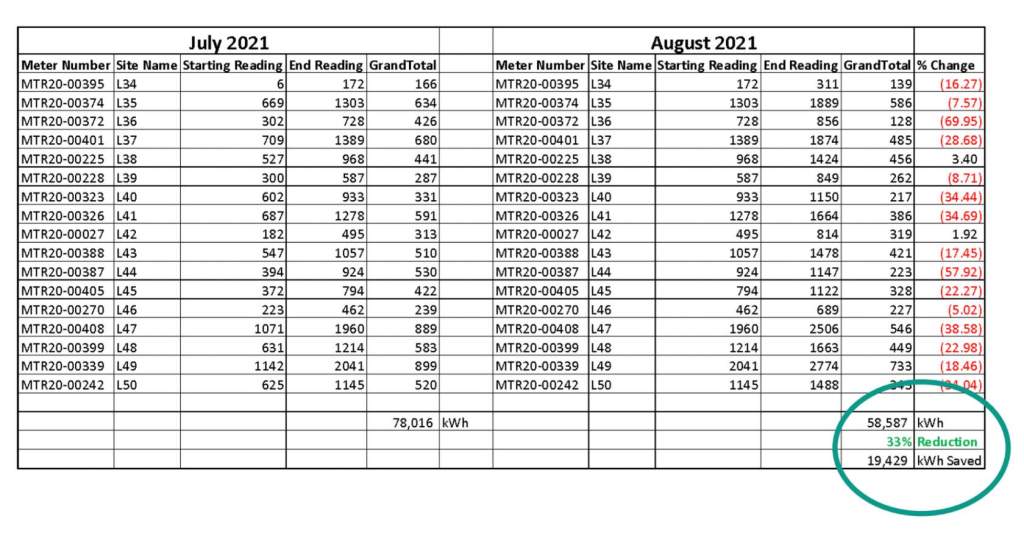
By ARVC’s calculations, electric metering of RV sites can reduce energy consumption by a third.

Indeed, the whole issue of who is going to pay for the extra electricity consumed by EV-RVs, and how, is still being sidestepped at the national level, quite possibly because there is no one answer. That, by itself, may become the biggest impediment to mom-and-pop campgrounds rushing into this brave new world. It’s notable, for example, that while ARVC now has an online “EV Toolkit” to help its members understand how to accommodate the new technology, the only guidance it provides for covering their costs is the vague advice to “consider billing for shorter stays, especially [campers] with unique equipment (large class As, EVs, electric golf carts, etc.), automatically billing those campers for the electricity they use. “

Presumably these and other issues will get resolved, sooner or later—once the industry stops talking around them. The RVing public, meanwhile, should brace itself for still higher costs, as a new electric sensibility starts percolating through the camping universe. Just as computerized reservation systems have introduced demand pricing and all kinds of add-on fees, the electrification push ultimately will result in all RV sites getting electric meters. Or as ARVC’s EV Toolkit asks, in a prominently displayed screen, “You don’t give away ice, candy bars or firewood, why give away electric?”

Most recent posts

IndyStar blasts RV industry big-time

Kate Mercer photo

Okay, class. Today we have a pop quiz–but don’t panic! There’s only one question, and the answer is multiple-choice, so you have at least a 25% chance of getting it right:

What do you get when an industry pressures an inadequately staffed and poorly-trained workforce into increasing output by almost 50%?

a) A lot of shoddy product.

b) A lot of sick and injured workers.

c) Record industry profits.

d) All of the above.

If you answered d), congratulations! You’ve just described Elkhart, Indiana, which is to recreational vehicles what Detroit once was to automobiles. Four out of every five RVs in the U.S. roll out of Elkhart, an area dominated by three major players the way Detroit was once dominated by Ford, Chrysler and GM: Thor Industries, Forest River and Winnebago Industries. Unlike Detroit, however, Elkhart is union-free in a so-called “right-to-work” state. And unlike Detroit in past decades, Elkhart has been ravaged by the Covid-19 coronavirus.

The result, as documented October 19 by the Indianapolis Star in a damning 15,000-word, four-part, multi-media series, is an industry riddled with broken bodies and a record number of recalled RVs, even as the major manufacturers all have been posting unsurpassed revenues and profit margins. Covid drove an unexpected surge in demand for RVs, much of it from first-time buyers who were looking for a safe way to travel. But Covid also decimated the ranks of RV factory workers, even as they were being pushed to increase production by almost 50%.

Two results were inevitable. One was a volley of Covid-19 complaints to the underfunded, undermanned and industry-friendly Indiana Occupational Safety and Health Administration, which responded not with inspections but with requests to employers to submit documents “proving” they were following Covid-19 safety protocols. Indeed, IOSHA’s response was so perfunctory that it physically inspected only 44 of more than 6,000 Covid-related complaints state-wide–the worst inspection rate in the U.S.–including just two in Elkhart County, neither involving major RV makers. The county eventually recorded nearly 700 Covid deaths.

But as the Star also found, problems in the RV plants had been brewing long before the epidemic, which the virus only exacerbated. “Workers told Indy Star about injuries from lax safety rules and the fast pace, drug use, unfair pay structures, a disciplinary system that punishes workers for taking sick time, a lack of training, and quality issues with products that leave factories,” the Star reported. “Several RV workers said they and others inside the factories needed daily uppers such as energy drinks, Ritalin or Adderall–even methamphetamine–to keep up with the pace.”

The other predictable result was that as the work pace picked up–one Winnebago employee said he went from working on 16 RVs a day to 36 during the pandemic–the products coming off the line were increasingly substandard. Ron Burdge, an Ohio attorney who has been suing RV manufacturers for years over defective products, told the Star that RV quality had been declining for at least 15 years prior to the pandemic, but took a nosedive once it hit. Record-setting recall numbers bear him out. Companies owned by Thor Industries recalled more than 156,000 RVs this year alone, while Forest River–a subsidiary of Berkshire Hathaway–recalled nearly 200,000 and Winnebago Industries recalled more than 125,000.

“All are among the highest for each company in the last five years,” the Star reported. “Among the problems that led to recalls: gas leaks, various electrical issues, increased propane pressure and poorly installed awnings.” One example it offered of the life-threatening dangers unwitting RV buyers have been accepting: an Oregon family that purchased a 40-foot Heartland Road Warrior for more than $100,000, only to have it burst into flame in Montana on the return trip home, totaling it and the tow vehicle. The cause appears to have been faulty wiring in the fifth-wheel’s electrical panel, yet as the Star observed, RV workers don’t need a license or certification to do electrical work.

Industry response to the Star’s findings, grim as they are, thus far consists either of stonewalling or of denying there is a problem in the first place. Thor Industries responded to the newspaper’s requests for comment by claiming the quality of its units had actually improved, even as it was making more of them, as evidenced by a lower level of warranty claims–without acknowledging not just this year’s 156,000 recalls, but the 371,384 recalls it had in 2021. Forest River, meanwhile, didn’t respond at all to the Star’s requests for comment, while Winnebago declined to answer the newspaper’s questions about quality issues.

The industry overall seems to be hoping the Star’s blockbuster series will sink out of sight. RV PRO, an online site “for the RV professional,” ran a terse and nonspecific news item about the series on the day it was published, much of it devoted to quoting an equally nonspecific response from the RV Industry Association, the trade association for RV manufacturers. Lamenting that it had been answering the Star’s questions for nearly a year, “emphasizing the high priority the RV industry places on workplace safety and the safety of our products,” the RVIA insisted that “protecting the safety of these valued employees is of paramount importance to our industry.”

RVIA’s own website, however, has none of that. Indeed, at this writing, the RVIA website makes no mention at all of the IndyStar story and its withering critique.

Putting an ironic frosting on the cake, so to speak, it must be noted that Winnebago Industries held a previously scheduled earnings call at 10 a.m. October 19, even as the Star’s report was being published online. Business was gangbusters, financial investors and analysts were told: fourth-quarter net revenues were up 14%, year over year, for a gross profit of $210.4 million. Net revenues for the year were $5 billion, for a record gross margin of 18.7%.

No questions were asked–and no information was given–about workforce or production issues. Chief financial officer Bryan Hughes, however, did offer the observation that “the company and our culture are successful because all our employees care deeply about our end customers, strategic business partners and each other.”

[The full Indianapolis Star series can be accessed here, but readers should note that virtually all of it is behind a paywall–non-subscribers will instead be shown a graphic novel that capsulizes some of the reporting, followed by an invitation to subscribe. The good news is that an introductory subscription can be had for just $1, with subsequent cancellation always an option.]

Most recent posts